

Cancer-related neuropathic pain
Key Pain Conditions
Worldwide, it is estimated that there will be 27.5 million new cases of cancer each year by 2040.20 A 2016 systematic review of prevalence of cancer-related pain in an adult population reported that 66% of patients with advanced, metastatic or terminal disease will experience pain, and that 38% of all patients with cancer will experience pain of moderate to severe intensity.21
CRNP is estimated to affect up to 39% of patients with cancer, when considering both pure neuropathic and mixed (e.g. neuropathic and nociceptive) pain.7 CIPN, a common treatment-related CRNP/PNP, has been reported to be prevalent in up to 70% of patients after the first month of chemotherapy, 60% at 3 months and 30% at 6 months or more.4
Prevalence of pain types in cancer patients from a systematic review7
| Data from 19 studies | Number of patients (%) |
|---|---|
| Combined total | 11,063 |
| Nociceptive pain | 6,569 (59.4%) |
| Neuropathic pain | 2.102 (19.0%) |
| Mixed-mechanism pain | 2,227 (20.1%) |
| Unknown or other cause(s) | 165 (1.5%) |

Type of cancer

Stage of cancer

Type/dose of therapy

Comorbidities

Medical history

Genetic factors

Smoking
CRNP is caused by damage or injury to the peripheral or central nervous system, due to the primary tumour and/or its metastases or cancer treatments.24 The most common causes of cancer treatment-related neuropathic pain are chemotherapy, radiotherapy and surgical interventions.25
Common classes of chemotherapy drugs causing peripheral neuropathy include:1,23
- Platinum-based drugs (e.g. cisplatin and oxaliplatin)
- Taxanes (e.g. paclitaxel and docetaxel)
- Thalidomide and proteasome inhibitors (e.g. bortezomib)
- Vinca alkaloids (e.g. vincristine and vinblastine)
Common aetiologies of CRNP26
| Neuropathic cancer pain | Treatment-related neuropathic pain |
|---|---|
| Radiculopathies (lumbosacral, cervical, thoracic radiculopathy) | Chemotherapy-induced neuropathies |
| Plexopathies (cervical, brachial, lumbosacral, coccygeal plexopathy) | Chronic post-surgical pain syndromes: post-mastectomy, post-neck dissection, post-thoracotomy |
| Peripheral neuropathies | Post-radiation pain syndrome : radiation-induced brachial plexopathies, radiation myelopathy, lymphoedema pain |
| Cranial neuralgia (glossopharyngeal, trigeminal neuralgia) | During and after immunotherapy27 |
| Leptomeningeal seeding | |
| Tumor-related bone pain* | |
| Spinal cord compressions |
*Tumor-related bone pain is a mixed type of neuropathic pain (somatic plus neuropathic)
The signs and symptoms of PNP, including CRNP,8 include shooting pain, sharp pain, stabbing pain, tingling, pricking, electric shocks, and pins and needles.24 Specifically, painful CIPN can manifest in hands, feet and sometimes in the face, and can extend in a ‘glove and stocking’ distribution affecting lower arms and lower legs.1 Chemotherapy-induced neuropathy symptoms predominantly start as tingling and/or numbness that later develop into pain.23,27 The combination of CIPN symptoms may continue to develop and progress for several months after therapy (‘coasting effect’) and may persist for several months to years.28 The same late onset and persistence is also true for radiotherapy-induced neuropathic pain.25
Common signs and symptoms associated with chemotherapy-induced peripheral neuropathy (CIPN)²⁷
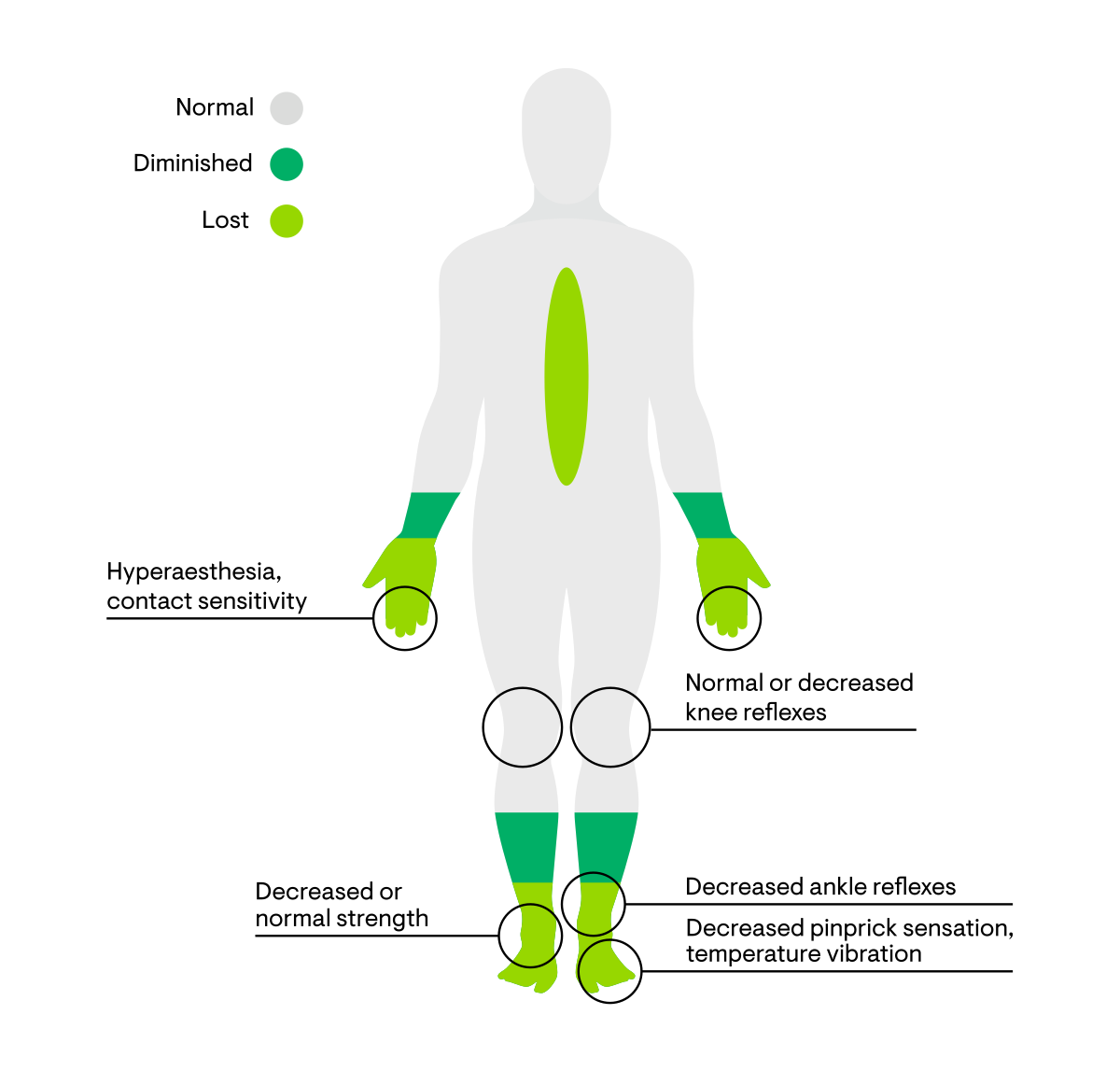
Pathophysiologically, CRNP occurs if the somatosensory nervous system is directly affected by tumour (primary or metastasis) infiltration or compression, tumour-associated toxins, therapy-related toxins or direct surgical damage.25 Damage to peripheral nerves results in changes at cellular and molecular levels that may cause sensitisation of the peripheral and central nerve pathways, similar to other PNP conditions [you can read more about the peripheral mechanisms here].29
CIPN is predominantly a sensory, axonal peripheral neuropathy that may be accompanied by motor and autonomic changes.23 Typically, longer axons are affected first, manifesting in the hands, feet and sometimes in the face.1,27
Mechanisms peripheral and central sensitisation in neuropathic pain³⁰’³¹

CRNP can be difficult to identify,24 particularly if the pain begins months or years after treatment, as in the case of radiation therapy.25 However, it is important to identify whether the pain is caused by a (new) tumour, related to treatment or to other comorbidities.32 The diagnostic process of neuropathic pain in patients with cancer should be no different to that of non–cancer-related neuropathic pain.24
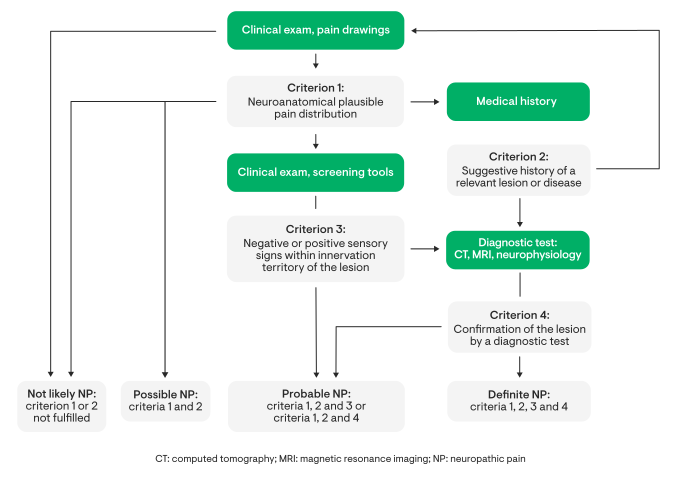
Probable or definite neuropathic pain can be identified using the revised definition and grading system proposed by the Neuropathic Pain Special Interest Group (NeuPSIG) of the International Association for the Study of Pain (IASP).33 Moreover, commonly used neuropathic pain-specific assessment tools, such as LANSS pain scale, DN4 questionnaire and PDQ have been evaluated for use specifically in CRNP.8–14
The assessment of a patient’s CRNP should be an ongoing process.15 The ESMO guidelines on the management of cancer pain discuss the assessment and reassessment of the pain (e.g. causes, pain quality descriptor) and the patient (e.g. clinical situation, functional status, presence of comorbidities).15 The guidelines also recommend that the assessment of all components of suffering, such as psychosocial distress, should be considered and evaluated.15
The International Classification of Diseases (ICD)-11 codes for the diagnosis of chronic cancer-related pain should be given in addition to the ICD-11 codes for the cancer itself. Cancer-related pain should be classified whether it was caused by the primary cancer itself, its metastases or its treatment.1
Assessment of cancer-related neuropathic pain¹⁵
| 2018 | ESMO | Management of cancer pain in adult patients: ESMO clinical practice guidelines |
|---|---|---|
| 2019 | EFIC | Standards for the management of cancer-related pain across Europe-A position paper from the EFIC Task Force on cancer pain |
| 2020 | ASCO | Prevention and management of chemotherapy-induced peripheral neuropathy in survivors of adult cancers: ASCO guideline update |
| 2020 | ESMO-EONS-EANO | Systemic anticancer therapy-induced peripheral and central neurotoxicity: ESMO-EONS-EANO clinical practice guidelines for diagnosis, prevention, treatment, and follow-up |
| 2021 | NCCN | NCCN clinical practice guidelines in oncology (NCCN Guidelines) |
| Symptomatic treatment-based therapeutics | Serotonin-norepinephrine reuptake inhibitors (SNRIs) |
|---|---|
| Anticonvulsants | |
| Pathological mechanism-based therapeutics | Neuronal uptake transporters |
| Axonal degeneration | |
| Mitochondrial dysfunction and oxidative stress | |
| Inflammatory mediators | |
| Other strategies | Gut microbiota-mediated strategies |
| Gene therapeutics | |
| Monoclonal antibodies | |
| Herbal medicines | |
| Non-pharmacological strategies | Acupuncture |
| Cryotheraphy and compression therapy | |
| Scrambler therapy | |
| Physical exercise | |
| Photobiomodulation |
While our understanding of the complex neurobiology of pain has increased, pain assessment, cancer-related pain neurobiology and the use of targeted therapies require further research.24 From other pain conditions, we know that a thorough pain assessment can indicate pain mechanisms and guide targeted therapy; this, in turn, can improve patient outcomes.24 Therefore, it is important that the cause of CRNP is correctly identified in order to achieve optimal pain control.1
There is a need to refer cancer patients with neuropathic pain to specialist services as early as possible when their pain is not responding to initial therapy, rather than waiting until all conventional approaches have been exhausted and the patient is too unwell for advanced pain management intervention.15,17 Unfortunately, only a minority of cancer patients with pain are currently referred to a pain specialist, so may not be adequately treated.40
Inadequate patient education is also a key barrier to effect cancer-related pain management.41,42 Educational interventions and resources can support patients with their own self-management, including coping strategies, and have been shown to facilitate better cancer pain management.1,41
Epidemiology
Worldwide, it is estimated that there will be 27.5 million new cases of cancer each year by 2040.20 A 2016 systematic review of prevalence of cancer-related pain in an adult population reported that 66% of patients with advanced, metastatic or terminal disease will experience pain, and that 38% of all patients with cancer will experience pain of moderate to severe intensity.21
CRNP is estimated to affect up to 39% of patients with cancer, when considering both pure neuropathic and mixed (e.g. neuropathic and nociceptive) pain.7 CIPN, a common treatment-related CRNP/PNP, has been reported to be prevalent in up to 70% of patients after the first month of chemotherapy, 60% at 3 months and 30% at 6 months or more.4
Prevalence of pain types in cancer patients from a systematic review7
| Data from 19 studies | Number of patients (%) |
|---|---|
| Combined total | 11,063 |
| Nociceptive pain | 6,569 (59.4%) |
| Neuropathic pain | 2.102 (19.0%) |
| Mixed-mechanism pain | 2,227 (20.1%) |
| Unknown or other cause(s) | 165 (1.5%) |
Type of cancer
Stage of cancer
Type/dose of therapy
Comorbidities
Medical history
Genetic factors
Smoking
CRNP is caused by damage or injury to the peripheral or central nervous system, due to the primary tumour and/or its metastases or cancer treatments.24 The most common causes of cancer treatment-related neuropathic pain are chemotherapy, radiotherapy and surgical interventions.25
Common classes of chemotherapy drugs causing peripheral neuropathy include:1,23
- Platinum-based drugs (e.g. cisplatin and oxaliplatin)
- Taxanes (e.g. paclitaxel and docetaxel)
- Thalidomide and proteasome inhibitors (e.g. bortezomib)
- Vinca alkaloids (e.g. vincristine and vinblastine)
Common aetiologies of CRNP26
| Neuropathic cancer pain | Treatment-related neuropathic pain |
|---|---|
| Radiculopathies (lumbosacral, cervical, thoracic radiculopathy) | Chemotherapy-induced neuropathies |
| Plexopathies (cervical, brachial, lumbosacral, coccygeal plexopathy) | Chronic post-surgical pain syndromes: post-mastectomy, post-neck dissection, post-thoracotomy |
| Peripheral neuropathies | Post-radiation pain syndrome : radiation-induced brachial plexopathies, radiation myelopathy, lymphoedema pain |
| Cranial neuralgia (glossopharyngeal, trigeminal neuralgia) | During and after immunotherapy27 |
| Leptomeningeal seeding | |
| Tumor-related bone pain* | |
| Spinal cord compressions |
*Tumor-related bone pain is a mixed type of neuropathic pain (somatic plus neuropathic)
The signs and symptoms of PNP, including CRNP,8 include shooting pain, sharp pain, stabbing pain, tingling, pricking, electric shocks, and pins and needles.24 Specifically, painful CIPN can manifest in hands, feet and sometimes in the face, and can extend in a ‘glove and stocking’ distribution affecting lower arms and lower legs.1 Chemotherapy-induced neuropathy symptoms predominantly start as tingling and/or numbness that later develop into pain.23,27 The combination of CIPN symptoms may continue to develop and progress for several months after therapy (‘coasting effect’) and may persist for several months to years.28 The same late onset and persistence is also true for radiotherapy-induced neuropathic pain.25
Common signs and symptoms associated with chemotherapy-induced peripheral neuropathy (CIPN)²⁷
Pathophysiologically, CRNP occurs if the somatosensory nervous system is directly affected by tumour (primary or metastasis) infiltration or compression, tumour-associated toxins, therapy-related toxins or direct surgical damage.25 Damage to peripheral nerves results in changes at cellular and molecular levels that may cause sensitisation of the peripheral and central nerve pathways, similar to other PNP conditions [you can read more about the peripheral mechanisms here].29
CIPN is predominantly a sensory, axonal peripheral neuropathy that may be accompanied by motor and autonomic changes.23 Typically, longer axons are affected first, manifesting in the hands, feet and sometimes in the face.1,27
Mechanisms peripheral and central sensitisation in neuropathic pain³⁰’³¹
CRNP can be difficult to identify,24 particularly if the pain begins months or years after treatment, as in the case of radiation therapy.25 However, it is important to identify whether the pain is caused by a (new) tumour, related to treatment or to other comorbidities.32 The diagnostic process of neuropathic pain in patients with cancer should be no different to that of non–cancer-related neuropathic pain.24
Probable or definite neuropathic pain can be identified using the revised definition and grading system proposed by the Neuropathic Pain Special Interest Group (NeuPSIG) of the International Association for the Study of Pain (IASP).33 Moreover, commonly used neuropathic pain-specific assessment tools, such as LANSS pain scale, DN4 questionnaire and PDQ have been evaluated for use specifically in CRNP.8–14
The assessment of a patient’s CRNP should be an ongoing process.15 The ESMO guidelines on the management of cancer pain discuss the assessment and reassessment of the pain (e.g. causes, pain quality descriptor) and the patient (e.g. clinical situation, functional status, presence of comorbidities).15 The guidelines also recommend that the assessment of all components of suffering, such as psychosocial distress, should be considered and evaluated.15
The International Classification of Diseases (ICD)-11 codes for the diagnosis of chronic cancer-related pain should be given in addition to the ICD-11 codes for the cancer itself. Cancer-related pain should be classified whether it was caused by the primary cancer itself, its metastases or its treatment.1
Assessment of cancer-related neuropathic pain¹⁵
| 2018 | ESMO | Management of cancer pain in adult patients: ESMO clinical practice guidelines |
|---|---|---|
| 2019 | EFIC | Standards for the management of cancer-related pain across Europe-A position paper from the EFIC Task Force on cancer pain |
| 2020 | ASCO | Prevention and management of chemotherapy-induced peripheral neuropathy in survivors of adult cancers: ASCO guideline update |
| 2020 | ESMO-EONS-EANO | Systemic anticancer therapy-induced peripheral and central neurotoxicity: ESMO-EONS-EANO clinical practice guidelines for diagnosis, prevention, treatment, and follow-up |
| 2021 | NCCN | NCCN clinical practice guidelines in oncology (NCCN Guidelines) |
| Symptomatic treatment-based therapeutics | Serotonin-norepinephrine reuptake inhibitors (SNRIs) |
|---|---|
| Anticonvulsants | |
| Pathological mechanism-based therapeutics | Neuronal uptake transporters |
| Axonal degeneration | |
| Mitochondrial dysfunction and oxidative stress | |
| Inflammatory mediators | |
| Other strategies | Gut microbiota-mediated strategies |
| Gene therapeutics | |
| Monoclonal antibodies | |
| Herbal medicines | |
| Non-pharmacological strategies | Acupuncture |
| Cryotheraphy and compression therapy | |
| Scrambler therapy | |
| Physical exercise | |
| Photobiomodulation |
While our understanding of the complex neurobiology of pain has increased, pain assessment, cancer-related pain neurobiology and the use of targeted therapies require further research.24 From other pain conditions, we know that a thorough pain assessment can indicate pain mechanisms and guide targeted therapy; this, in turn, can improve patient outcomes.24 Therefore, it is important that the cause of CRNP is correctly identified in order to achieve optimal pain control.1
There is a need to refer cancer patients with neuropathic pain to specialist services as early as possible when their pain is not responding to initial therapy, rather than waiting until all conventional approaches have been exhausted and the patient is too unwell for advanced pain management intervention.15,17 Unfortunately, only a minority of cancer patients with pain are currently referred to a pain specialist, so may not be adequately treated.40
Inadequate patient education is also a key barrier to effect cancer-related pain management.41,42 Educational interventions and resources can support patients with their own self-management, including coping strategies, and have been shown to facilitate better cancer pain management.1,41