

Cluster headache
Key Pain Conditions

| Country | 1-year incidence | 1-year prevalence | Lifetime prevalence |
|---|---|---|---|
| San Marino | 2.5 |
| 56-69 |
| USA | 2-10 |
|
|
| Ethiopia/Meskan and Marko |
| 32 |
|
| Germany |
| 119-150 |
|
| Italy |
|
| 279 |
| Norway |
|
| 381 |
| Portugal |
|
| 100 |
| Sweden |
|
| 92-144 |

Sex: men are more likely to have cluster headaches¹’²

Smoking¹’⁵

Alcohol use¹’⁶

Family history¹
Alcohol consumption¹’⁶

Stress¹’⁶

Sleep¹’⁶

Weather changes¹’⁴⁻⁶

Pharmacological triggers⁶, e.g. nitroglycerin⁷

Excruciating pain in, behind or around one eye

One-sided pain

Conjunctival injection

Lacrimation (excessive tearing)

Redness of eye on affected side
Rhinorrhoea/nasal congestion (stuffy or running nose on affected side)

Forehaed and facial sweating

Eyelid oedema

Ptosis (drooping eyelid on affected side)

Restlessness and agitation
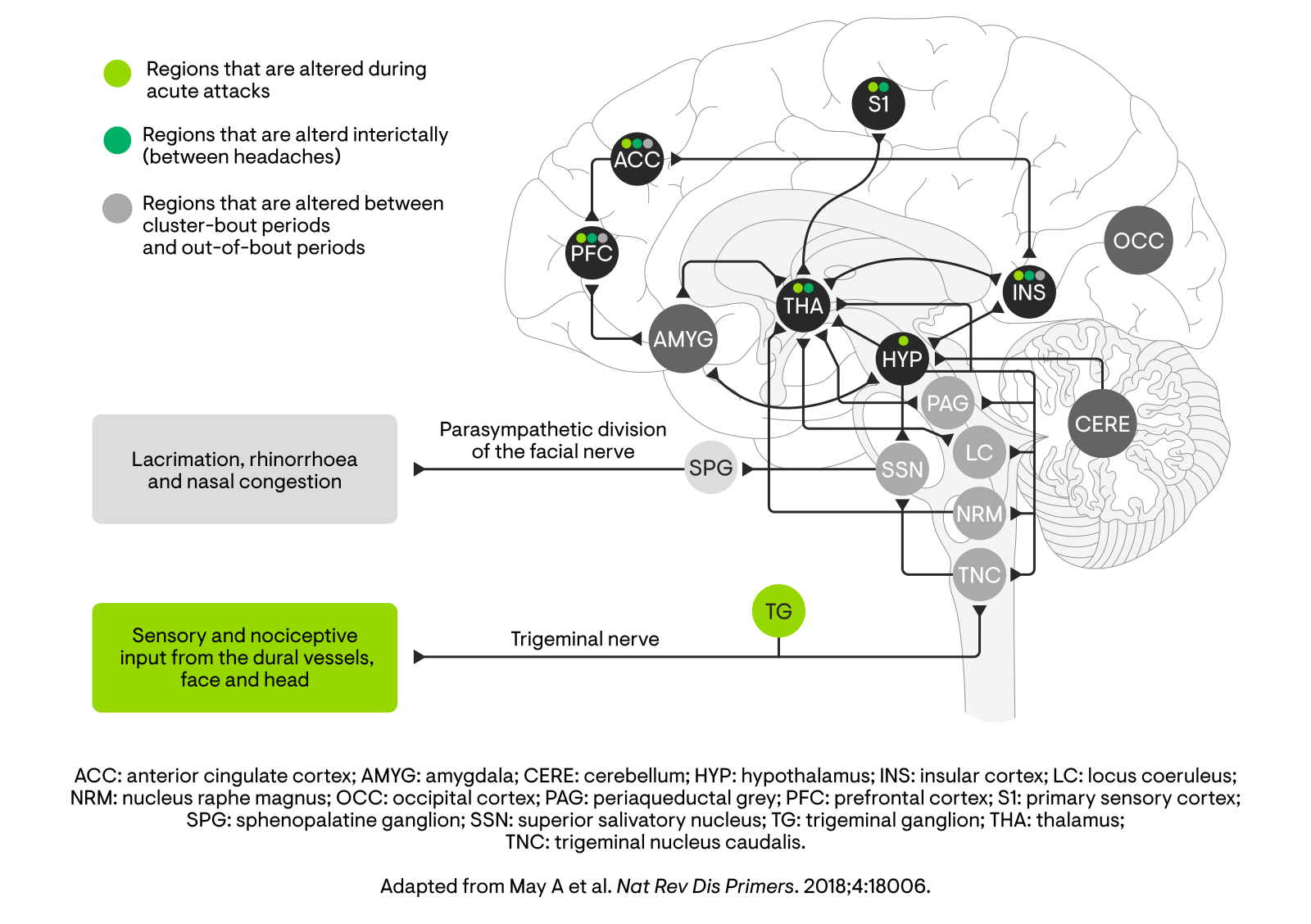
Cluster headache has a complex pathophysiology and the underlying mechanisms are not fully known. Although they present as very different headache disorders, the pathophysiology of cluster headache is similar to that of migraine and the pain in the head is believed to be mediated by activation of neuronal pathways in the trigeminovascular system.1,8 The strongest evidence for alterations in patients with cluster headache is for the hypothalamus, where initial structural and functional changes take place.1 Several neuronal connections exist between the hypothalamus and regions of the trigeminovascular system, with studies indicating that the hypothalamus receives sensory input, including nociceptive information, from areas of the face and cranium innervated by the trigeminal nerve.1
In addition, anatomical and functional links between the hypothalamus and brain areas that are traditionally not considered to be involved in pain processing, such as the occipital cortex and cerebellum, are altered in cluster headache and may have a contributory role in its pathophysiology.1
The autonomic symptoms of cluster headache are thought to be mediated through the trigeminal autonomic reflex, with activation of the trigeminal nerve thought to lead to activation of parasympathetic efferents, producing autonomic symptoms.1
Pathways in the pathogenesis of cluster headache¹
| A | At least five attacks fulfilling criteria B-D | |||||
| B | Severe or very severe unilateral orbital, supraorbital and/ or temporal pain lasting 15-180 minutes (when untreated) | |||||
| C | Either or both of the following | 1 | at lease 1 of the following symptoms or signs, ipsilateral to the headache: | a) | conjunctival injection and/or lacrimation | |
| b) | nasal congestion and/or rhinorrhea | |||||
| c) | eyelid oedema | |||||
| d) | forehead and facial sweating | |||||
| e) | miosis and/or ptosis | |||||
| 2 | a sense of restlessness or agitation | |||||
| D | Occurring with a frequency between 1 every other day and 8 per day | |||||
| E | Not better accounted for by another ICHD-3 diagnosis | |||||
| For episodic cluster headache3 | F | Attacks fulfilling the criteria for cluster headache and occurring in bouts (cluster periodes) | ||||
| G | At least two cluster periods lasting from 7 month to 1 year (when untreated) and separated by pain-free remission periods of 23 months | |||||
| For chronic cluster headache3 | H | Attacks fulfilling the criteria for cluster headache | ||||
| I | Occurring without a remission period, or with remission lasting <3month, for at least 1 year | |||||
ICHD-3: International Classification of Headache Disorders 3rd Edition)
Guidelines and recommendations
Once effective treatment has been established, future episodes of cluster headache, or maintenance therapy in the case of chronic cluster headache, can be managed by primary care providers, albeit with frequent follow-up.9 Patients with episodic cluster headache in remission should be advised to return promptly at the onset of the next cluster headache episode.9
SPG: sphenopalatine ganglion.
Pharmacological treatments
Although the objective of management in both episodic and chronic cluster headache is total attack suppression, this is not always achievable.9 Three strategies are employed in the treatment of cluster headache. Acute or abortive treatments are used in individuals attacks to stop the pain once it has started.9 Preventive treatments are used for the duration of the cluster period to reduce frequency, duration and severity of individual attacks within that period, and are the mainstay of treatment in the majority of cases.9 Interim (transition) treatments are given at the onset of a cluster period to achieve more rapid response during dose escalation of any of the preventive drugs and may be used while waiting for a preventive treatment to have a therapeutic effect.9,11
There is a lack of large-scale controlled trials on treatment of cluster headache.1 While genetic studies, clinical observations and neuroimaging studies have improved the understanding of cluster headache,1 further research is necessary to characterise the cause of cluster headache and identify new biomarkers to inform the development of improved treatments.
Epidemiology
| Country | 1-year incidence | 1-year prevalence | Lifetime prevalence |
|---|---|---|---|
| San Marino | 2.5 |
| 56-69 |
| USA | 2-10 |
|
|
| Ethiopia/Meskan and Marko |
| 32 |
|
| Germany |
| 119-150 |
|
| Italy |
|
| 279 |
| Norway |
|
| 381 |
| Portugal |
|
| 100 |
| Sweden |
|
| 92-144 |
Sex: men are more likely to have cluster headaches¹’²
Smoking¹’⁵
Alcohol use¹’⁶
Family history¹
Alcohol consumption¹’⁶
Stress¹’⁶
Sleep¹’⁶
Weather changes¹’⁴⁻⁶
Pharmacological triggers⁶, e.g. nitroglycerin⁷
Excruciating pain in, behind or around one eye
One-sided pain
Conjunctival injection
Lacrimation (excessive tearing)
Redness of eye on affected side
Rhinorrhoea/nasal congestion (stuffy or running nose on affected side)
Forehaed and facial sweating
Eyelid oedema
Ptosis (drooping eyelid on affected side)
Restlessness and agitation
Cluster headache has a complex pathophysiology and the underlying mechanisms are not fully known. Although they present as very different headache disorders, the pathophysiology of cluster headache is similar to that of migraine and the pain in the head is believed to be mediated by activation of neuronal pathways in the trigeminovascular system.1,8 The strongest evidence for alterations in patients with cluster headache is for the hypothalamus, where initial structural and functional changes take place.1 Several neuronal connections exist between the hypothalamus and regions of the trigeminovascular system, with studies indicating that the hypothalamus receives sensory input, including nociceptive information, from areas of the face and cranium innervated by the trigeminal nerve.1
In addition, anatomical and functional links between the hypothalamus and brain areas that are traditionally not considered to be involved in pain processing, such as the occipital cortex and cerebellum, are altered in cluster headache and may have a contributory role in its pathophysiology.1
The autonomic symptoms of cluster headache are thought to be mediated through the trigeminal autonomic reflex, with activation of the trigeminal nerve thought to lead to activation of parasympathetic efferents, producing autonomic symptoms.1
Pathways in the pathogenesis of cluster headache¹
| A | At least five attacks fulfilling criteria B-D | |||||
| B | Severe or very severe unilateral orbital, supraorbital and/ or temporal pain lasting 15-180 minutes (when untreated) | |||||
| C | Either or both of the following | 1 | at lease 1 of the following symptoms or signs, ipsilateral to the headache: | a) | conjunctival injection and/or lacrimation | |
| b) | nasal congestion and/or rhinorrhea | |||||
| c) | eyelid oedema | |||||
| d) | forehead and facial sweating | |||||
| e) | miosis and/or ptosis | |||||
| 2 | a sense of restlessness or agitation | |||||
| D | Occurring with a frequency between 1 every other day and 8 per day | |||||
| E | Not better accounted for by another ICHD-3 diagnosis | |||||
| For episodic cluster headache3 | F | Attacks fulfilling the criteria for cluster headache and occurring in bouts (cluster periodes) | ||||
| G | At least two cluster periods lasting from 7 month to 1 year (when untreated) and separated by pain-free remission periods of 23 months | |||||
| For chronic cluster headache3 | H | Attacks fulfilling the criteria for cluster headache | ||||
| I | Occurring without a remission period, or with remission lasting <3month, for at least 1 year | |||||
ICHD-3: International Classification of Headache Disorders 3rd Edition)
Guidelines and recommendations
Once effective treatment has been established, future episodes of cluster headache, or maintenance therapy in the case of chronic cluster headache, can be managed by primary care providers, albeit with frequent follow-up.9 Patients with episodic cluster headache in remission should be advised to return promptly at the onset of the next cluster headache episode.9
SPG: sphenopalatine ganglion.
Pharmacological treatments
Although the objective of management in both episodic and chronic cluster headache is total attack suppression, this is not always achievable.9 Three strategies are employed in the treatment of cluster headache. Acute or abortive treatments are used in individuals attacks to stop the pain once it has started.9 Preventive treatments are used for the duration of the cluster period to reduce frequency, duration and severity of individual attacks within that period, and are the mainstay of treatment in the majority of cases.9 Interim (transition) treatments are given at the onset of a cluster period to achieve more rapid response during dose escalation of any of the preventive drugs and may be used while waiting for a preventive treatment to have a therapeutic effect.9,11
There is a lack of large-scale controlled trials on treatment of cluster headache.1 While genetic studies, clinical observations and neuroimaging studies have improved the understanding of cluster headache,1 further research is necessary to characterise the cause of cluster headache and identify new biomarkers to inform the development of improved treatments.