

Migraine
Key Pain Conditions

Migraine is the third most common disease in the world, affecting approximately 1 in 7 people, at a global prevalence of 14.7%.7 It affects 3 times as many women as men, with links to hormonal differences driving the disease.4,8 Migraine starts at puberty in many cases but mostly affects people between 35 and 45 years of age; however, it can also present in childhood.9
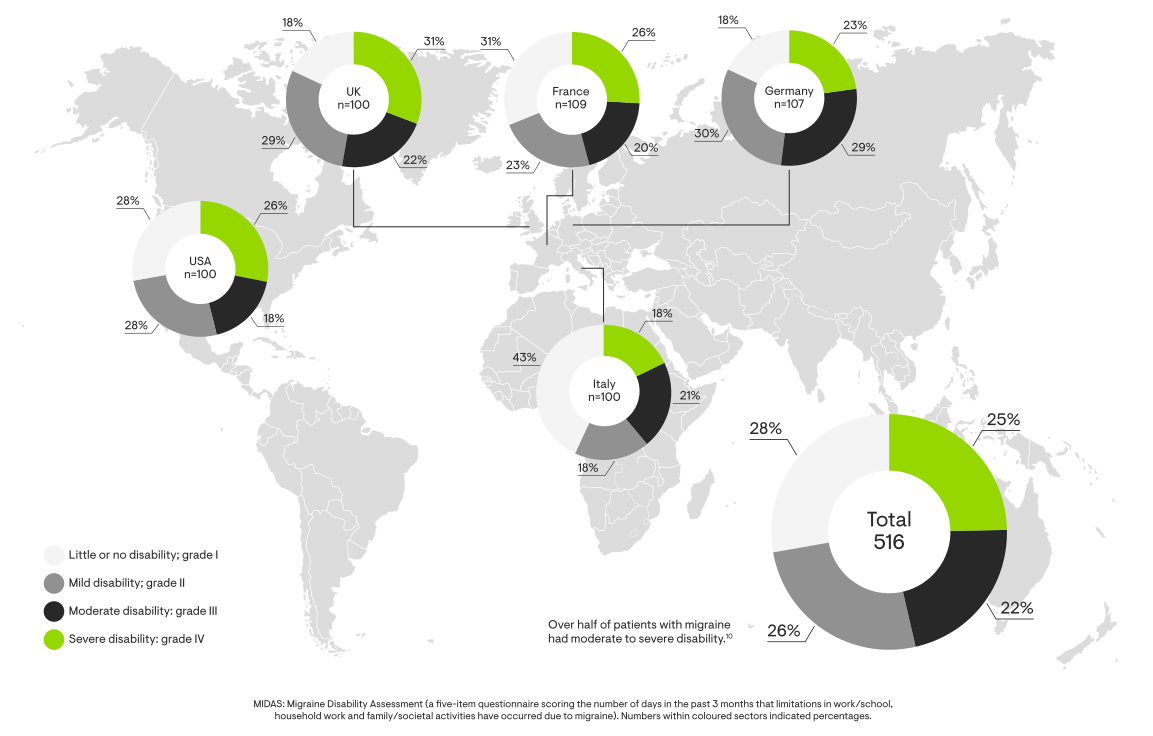
The burden of migraine assessed by Migraine Disability Assessment (MIDAS) is shown below.10,11 Over half of patients with migraine had moderate to severe disability.10
The burden of migraine assessed by MIDA¹⁰’¹¹
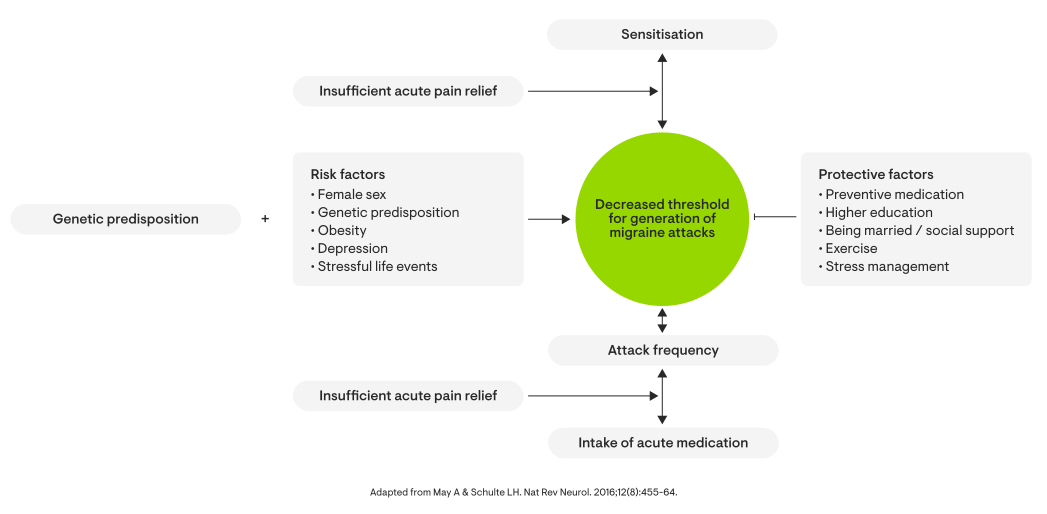
Several risk factors predispose people to chronic migraine, including ineffective or overuse of acute migraine medications, obesity, depression and stressful life events.4 Age, female sex and low educational status also increase the risk of chronic migraine.4 There is also a genetic element to migraine, with mutations in three genes involved in ion transport and neurotransmitter release being implicated in familial hemiplegic migraine.12
Pharmacological treatments
Migraine can be caused by a multitude of factors including ingestion of certain foods, stress, overuse of acute medication, physical activity, low blood sugar, anxiety and shock as well as hormonal changes, sensory stimuli such as bright lights or loud sounds, sleep changes, weather changes and smells.13
Causes of migraine13
| Type of cause | Hormonal changes | Emotional triggers | Physical triggers | Dietary triggers | Environmental triggers | Medicines |
|---|---|---|---|---|---|---|
| Specific examples |
|
|
|
|
|
|
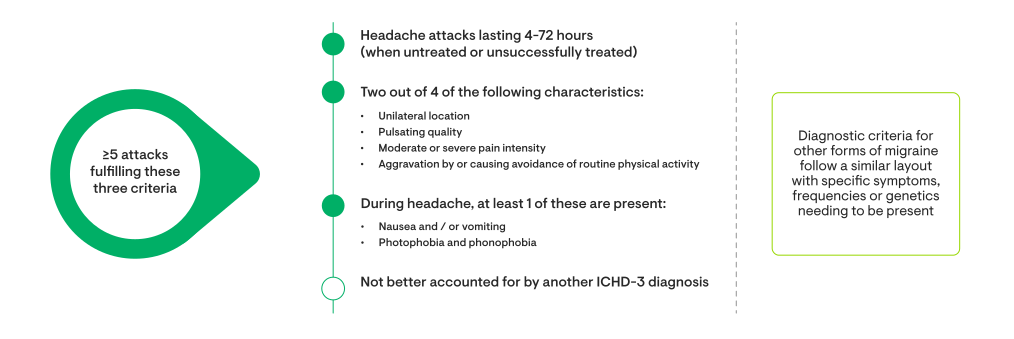
Migraine is characterised by headache lasting between 4–72 hours of pulsating quality associated with nausea and/or photophobia and phonophobia.2
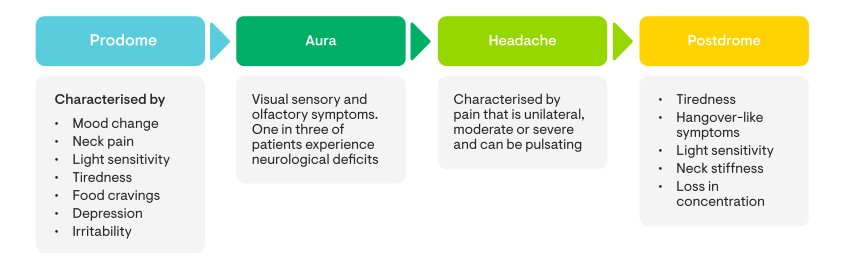
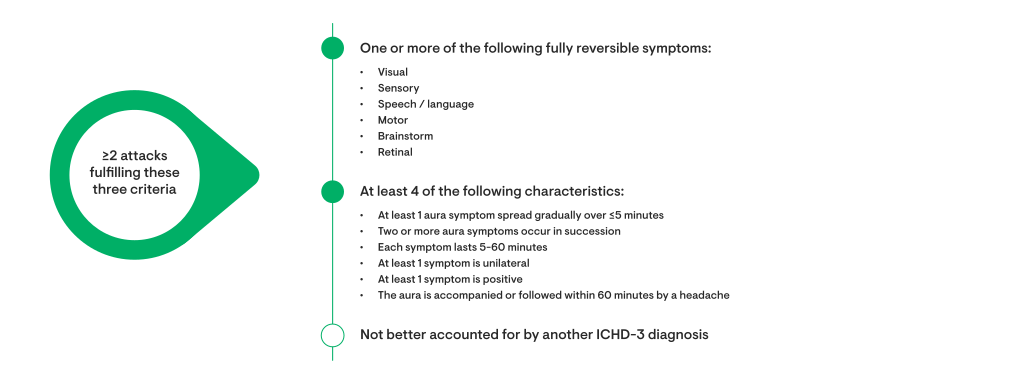
Migraine is split into four characteristic symptom phases: the prodrome/premonitory phase, aura, headache and postdrome.1,14 Not all patients experience all four phases and there are two classifications of migraine based on the presence or absence of the aura phase that precedes the headache.2 Patients who experience the migraine aura also suffer transient focal neurological symptoms.1
Pathophysiology of migraine – the four migraine phases¹
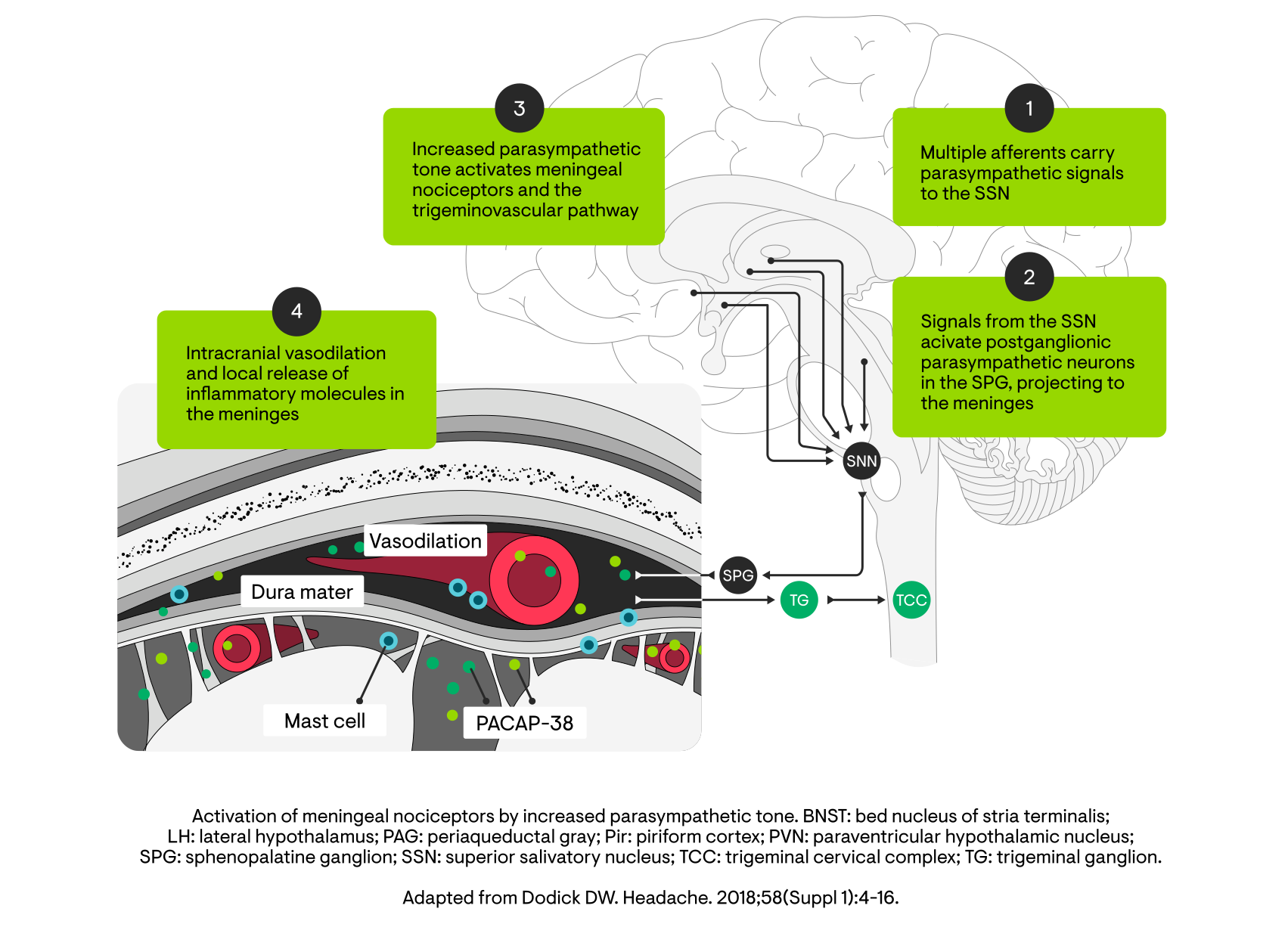
Migraine is a complex brain network disorder involving multiple cortical, subcortical and brainstem regions, which is characterised by neuronal hyperexcitability.15 Nociceptive signals reaching the thalamus are regulated by the release of excitatory and inhibitory neuropeptides/neurotransmitters from hypothalamic and brainstem neurons.16 The inputs from these neurons modulate the allostatic load of the brain, i.e. the amount of stress that can be managed, and determine whether nociceptive signals are relayed to the cortex.15,16
It is argued that increased nociception can also be attributed to a low cyclical brainstem activity, which lowers the threshold for nociceptive signal transmission.15 The hypothalamus is implicated in the prodrome phase, with activations noted in the posterolateral hypothalamus and the midbrain tegmental area, periaqueductal gray, dorsal pons and cortical areas.15
Pathophysiology of migraine¹⁶
There are two major types of migraine: migraine without aura and migraine with aura, which have slightly different diagnostic criteria as described in the International Classification of Headache Disorders (ICHD).17 There are many subgroups of migraine with aura that are described further in the ICHD-3.17
ICHD-3 diagnostic criteria for migraine without aura.¹⁷
ICHD-3 diagnostic criteria for migraine with aura.¹⁷
Guidelines and recommendations
Acute migraine management includes both non-specific (symptomatic) and specific anti-migraine medications. Predominantly non-specific treatments are used for mild to moderate migraine attacks whereas specific anti-migraine treatments are used in severe cases.18,19 Regular use of acute medication can lead to medication overuse headaches and so care must be taken to avoid this.16
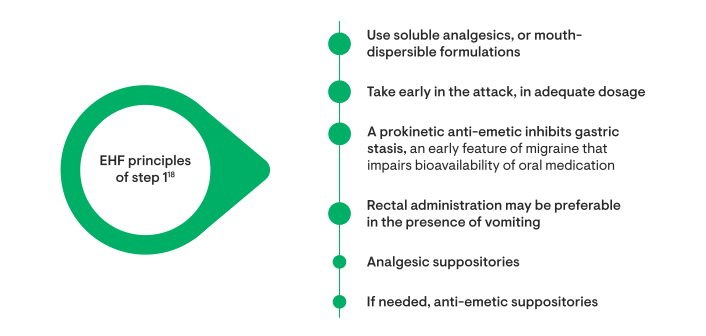
European Headache Federation (EHF) guidelines suggest a stepwise approach to migraine treatment: in step 1, use simple analgesics early on in the attack alongside anti-emetics to avoid gastric symptoms associated with medication; triptans are then used in step 2, when patients do not respond to treatment in step 1.18
The latest International Headache Society (IHS) and EHF guidelines are available here.
European Headache Federation (EHF) guidelines¹⁸
Pharmacological treatments
Treatment options for migraine4,19,20
| Pharmacological |
|---|
| Non-opioid analgesics |
| Opioid analgesics |
| Triptans |
| Ergotamine derivatives |
| Procedural |
|---|
| Greater occipital nerve blockade |
| Occipital nerve stimulation |
| Transcutaneous vagal nerve stimulation |
| High-frequency repetitive transcranial magnetic stimulation |
| Supraorbital stimulation |
| Non-pharmacological treatments |
|---|
| Biofeedback |
| Excercise |
| Cognitive therapies |
| Stress management |
| Manual therapy |
Prophylactic migraine teatments19,20,21
| Beta blockers19,20 |
| Calcium channel blockers19 |
| Anticonvulsants19 |
| Tricyclic antidepressants19 |
| Other antidepressants19 |
| NSAIDs19 |
| ACE Inhibitors19 |
| Anti-histamines19 |
| Serotonin antagonists |
| Anticonvulsants21 |
| CGRP inhibitors22 |
ACE: angiotensin-converting enzyme; CGRP: calcitonin gene-related peptide; NSAID: non-steroidal anti-inflammatory drug
Calcitonin gene-related peptide (CGRP) is involved in pain modulation, perception and sensitisation, and research shows that its activity is increased during migraine attacks.23 Anti-CGRP monoclonal antibodies are a novel option in the prophylactic treatment of migraine.23 Such migraine-specific approaches have the potential to individualise preventive treatment in this condition and improve patient outcomes.23
Current treatments for migraine result only in sustained pain relief for a small subset of patients and can be associated with medication overuse headaches when used frequently.4,6 This is an obvious problem for patients exhibiting frequent migraine episodes. Prophylactic treatments show promise for the prevention of migraine chronification; however, there is a need for specific randomised controlled trials that investigate treatment options for medication overuse headache.4 As well as the need for more detailed studies, education is warranted for patients regarding the dangers of acute medication overuse.6
Epidemiology
Migraine is the third most common disease in the world, affecting approximately 1 in 7 people, at a global prevalence of 14.7%.7 It affects 3 times as many women as men, with links to hormonal differences driving the disease.4,8 Migraine starts at puberty in many cases but mostly affects people between 35 and 45 years of age; however, it can also present in childhood.9
The burden of migraine assessed by Migraine Disability Assessment (MIDAS) is shown below.10,11 Over half of patients with migraine had moderate to severe disability.10
The burden of migraine assessed by MIDA¹⁰’¹¹
Several risk factors predispose people to chronic migraine, including ineffective or overuse of acute migraine medications, obesity, depression and stressful life events.4 Age, female sex and low educational status also increase the risk of chronic migraine.4 There is also a genetic element to migraine, with mutations in three genes involved in ion transport and neurotransmitter release being implicated in familial hemiplegic migraine.12
Pharmacological treatments
Migraine can be caused by a multitude of factors including ingestion of certain foods, stress, overuse of acute medication, physical activity, low blood sugar, anxiety and shock as well as hormonal changes, sensory stimuli such as bright lights or loud sounds, sleep changes, weather changes and smells.13
Causes of migraine13
| Type of cause | Hormonal changes | Emotional triggers | Physical triggers | Dietary triggers | Environmental triggers | Medicines |
|---|---|---|---|---|---|---|
| Specific examples |
|
|
|
|
|
|
Migraine is characterised by headache lasting between 4–72 hours of pulsating quality associated with nausea and/or photophobia and phonophobia.2
Migraine is split into four characteristic symptom phases: the prodrome/premonitory phase, aura, headache and postdrome.1,14 Not all patients experience all four phases and there are two classifications of migraine based on the presence or absence of the aura phase that precedes the headache.2 Patients who experience the migraine aura also suffer transient focal neurological symptoms.1
Pathophysiology of migraine – the four migraine phases¹
Migraine is a complex brain network disorder involving multiple cortical, subcortical and brainstem regions, which is characterised by neuronal hyperexcitability.15 Nociceptive signals reaching the thalamus are regulated by the release of excitatory and inhibitory neuropeptides/neurotransmitters from hypothalamic and brainstem neurons.16 The inputs from these neurons modulate the allostatic load of the brain, i.e. the amount of stress that can be managed, and determine whether nociceptive signals are relayed to the cortex.15,16
It is argued that increased nociception can also be attributed to a low cyclical brainstem activity, which lowers the threshold for nociceptive signal transmission.15 The hypothalamus is implicated in the prodrome phase, with activations noted in the posterolateral hypothalamus and the midbrain tegmental area, periaqueductal gray, dorsal pons and cortical areas.15
Pathophysiology of migraine¹⁶
There are two major types of migraine: migraine without aura and migraine with aura, which have slightly different diagnostic criteria as described in the International Classification of Headache Disorders (ICHD).17 There are many subgroups of migraine with aura that are described further in the ICHD-3.17
ICHD-3 diagnostic criteria for migraine without aura.¹⁷
ICHD-3 diagnostic criteria for migraine with aura.¹⁷
Guidelines and recommendations
Acute migraine management includes both non-specific (symptomatic) and specific anti-migraine medications. Predominantly non-specific treatments are used for mild to moderate migraine attacks whereas specific anti-migraine treatments are used in severe cases.18,19 Regular use of acute medication can lead to medication overuse headaches and so care must be taken to avoid this.16
European Headache Federation (EHF) guidelines suggest a stepwise approach to migraine treatment: in step 1, use simple analgesics early on in the attack alongside anti-emetics to avoid gastric symptoms associated with medication; triptans are then used in step 2, when patients do not respond to treatment in step 1.18
The latest International Headache Society (IHS) and EHF guidelines are available here.
European Headache Federation (EHF) guidelines¹⁸
Pharmacological treatments
Treatment options for migraine4,19,20
| Pharmacological |
|---|
| Non-opioid analgesics |
| Opioid analgesics |
| Triptans |
| Ergotamine derivatives |
| Procedural |
|---|
| Greater occipital nerve blockade |
| Occipital nerve stimulation |
| Transcutaneous vagal nerve stimulation |
| High-frequency repetitive transcranial magnetic stimulation |
| Supraorbital stimulation |
| Non-pharmacological treatments |
|---|
| Biofeedback |
| Excercise |
| Cognitive therapies |
| Stress management |
| Manual therapy |
Prophylactic migraine teatments19,20,21
| Beta blockers19,20 |
| Calcium channel blockers19 |
| Anticonvulsants19 |
| Tricyclic antidepressants19 |
| Other antidepressants19 |
| NSAIDs19 |
| ACE Inhibitors19 |
| Anti-histamines19 |
| Serotonin antagonists |
| Anticonvulsants21 |
| CGRP inhibitors22 |
ACE: angiotensin-converting enzyme; CGRP: calcitonin gene-related peptide; NSAID: non-steroidal anti-inflammatory drug
Calcitonin gene-related peptide (CGRP) is involved in pain modulation, perception and sensitisation, and research shows that its activity is increased during migraine attacks.23 Anti-CGRP monoclonal antibodies are a novel option in the prophylactic treatment of migraine.23 Such migraine-specific approaches have the potential to individualise preventive treatment in this condition and improve patient outcomes.23
Current treatments for migraine result only in sustained pain relief for a small subset of patients and can be associated with medication overuse headaches when used frequently.4,6 This is an obvious problem for patients exhibiting frequent migraine episodes. Prophylactic treatments show promise for the prevention of migraine chronification; however, there is a need for specific randomised controlled trials that investigate treatment options for medication overuse headache.4 As well as the need for more detailed studies, education is warranted for patients regarding the dangers of acute medication overuse.6