

Peripheral neuropathic pain
Key Pain Conditions

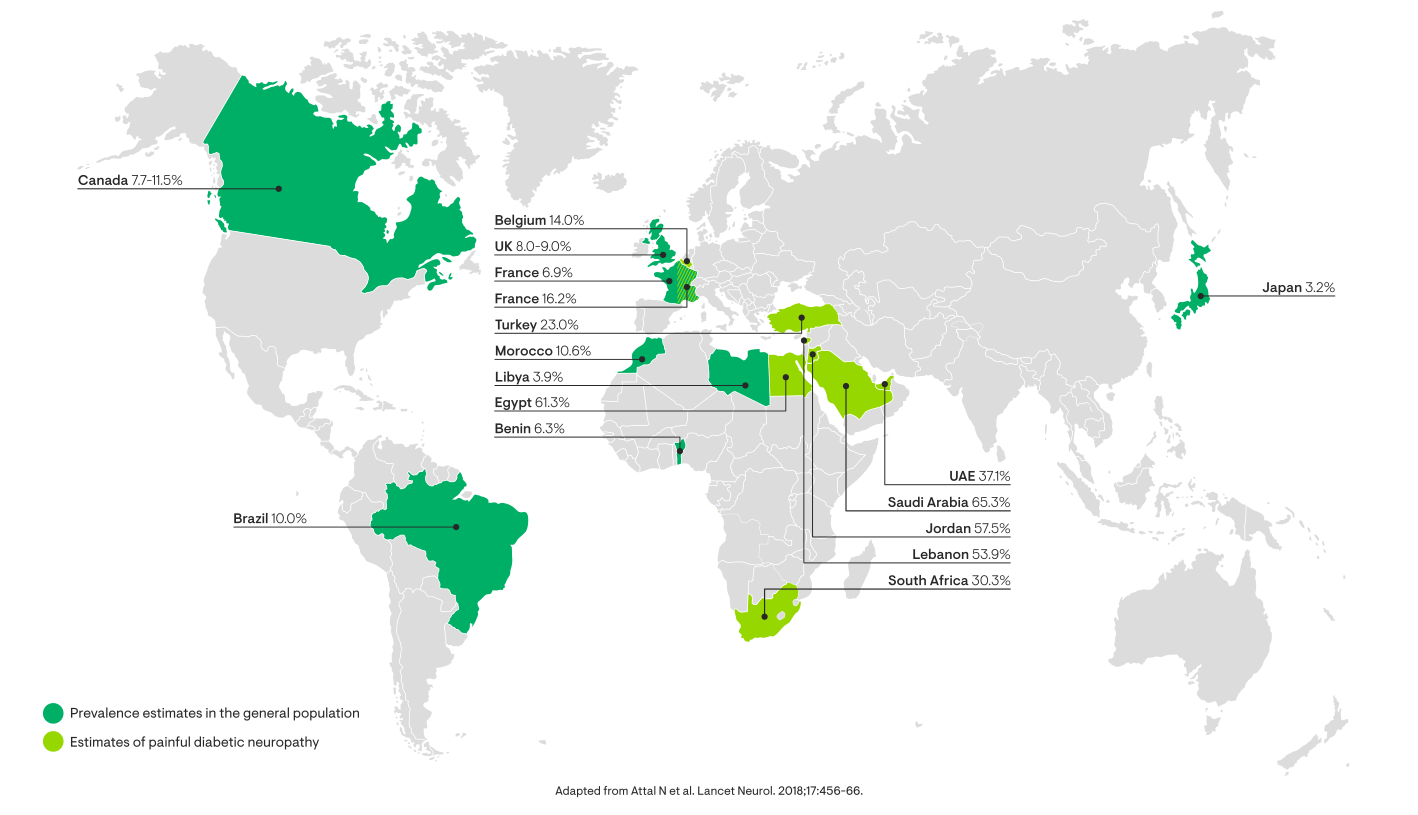
Chronic pain with neuropathic characteristics is estimated to affect 7–10% of the general population.6 Multiple causes of PNP have been described and its incidence is likely to increase owing to the ageing global population, increased incidence of diabetes mellitus and improved survival from cancer.6 A 2014 systematic review of epidemiological studies estimated the global incidence of two key PNP conditions – post-herpetic neuralgia and diabetic peripheral neuropathy – as 3.9‒42.0 per 100,000 person-years and 15.3–72.3 per 100,000 person-years, respectively.9
Chronic neuropathic pain is more frequent in women (8.0% vs 5.7% in men) and in patients over the age of 50 years (8.9% vs 5.6% in those under 50 years), and most commonly affects the lower back and lower limbs, neck and upper limbs.6
Global prevalence of pain with neuropathic characteristics in the general population.¹⁰
There are several types of peripheral neuropathy and the risk factors associated with each will depend on the function of the underlying condition or nerves affected. PNP can either be inherited or develop as a result of injury or illness.4 The most common type of peripheral neuropathy occurs as a complication of diabetes, affecting 60–70% of patients with diabetes.4
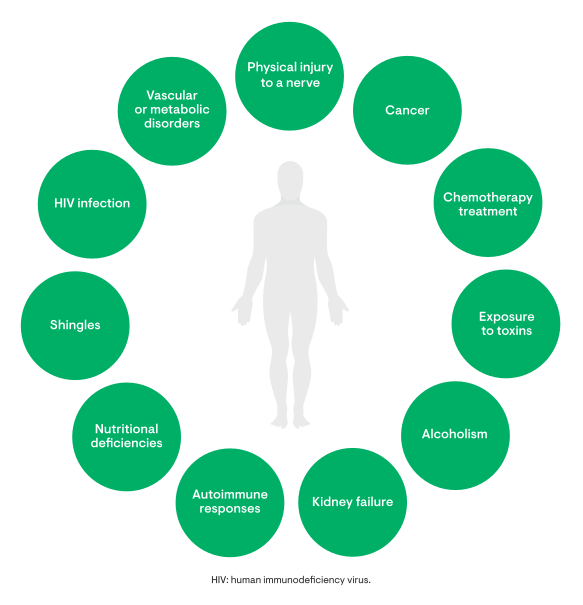
Other risk factors for peripheral neuropathy include:⁴’⁵
Neuropathic pain syndromes are chronic pain disorders caused as a direct consequence of a lesion or by disease of the parts of the nervous system that normally signal pain.5 They comprise a group of heterogeneous conditions, which may be caused by health conditions, certain medications or trauma. However, in certain cases, no cause can be identified and this is known as idiopathic neuropathy.11
Most prevalent types of peripheral neuropathy4
| Type of peripheral neuropathy | Prevalence |
|---|---|
| Diabetic | 60-70% of patients with diabetes |
| Chemotherapy-induced | 30-40% of patients with cancer |
| HIV/AIDS | 33% of patients with HIV/AIDS |
| Idiopathic | 23% |
HIV/AIDS: human immunodeficiency virus/acquired immune deficiency syndrome.

Numbness

Tingling

Pins and needles

Burning

Shooting pain

Electric shock-like sensation
The development of neuropathic pain is multifactorial and the mechanisms are not disease-dependent. Different PNP conditions may involve the same mechanism and the same PNP symptom may be caused by different mechanisms.13
Typically, neuropathic pain is elicited by a nerve lesion of afferent pathways.13 Under healthy conditions, the activation of unmyelinated (C-fibre) and thinly myelinated (Aδ-fibre) primary afferent neurons occurs only in response to tissue damage; however, following a peripheral nerve lesion, the activity of these neurons is spontaneous and evident in both injured and adjacent non-injured neurons.5,13 It is thought that an increased expression of sodium channels in these fibres lowers the action potential threshold, causing them to fire in response to non-noxious stimuli.13 Nerve injury also leads to increased membrane excitability of nociceptive nerves and increases the expression of various receptor proteins thought to be associated with abnormal responses to thermal and mechanical stimuli.13
Allodynia and hyperalgesia in the area of the peripheral nerve lesion is caused by central sensitisation, which involves the central nervous system. Persistent firing of the peripheral nerve fibres leads to the release of excitatory chemicals within the dorsal horn of the spinal cord, which induce changes in second-order neurons, causing hyperexcitability and lowering the threshold for activation.13
Mechanisms of peripheral and central sensitisation in neuropathic pain⁵ ¹³

Screening asymptomatic patients
Identifying PNP conditions in patient subgroups in which the disorder is highly prevalent (e.g. diabetic peripheral neuropathy in individuals with diabetes) involves regular screening and physical examination.7
In-office screening tools include questionnaires designed to test for symptoms of PNP, such as the Neuropathic Pain Symptom Inventory (NPSI), the Neuropathic Pain 4 Questions (DN4; Douleur Neuropathique en 4 Questions), the Leeds Assessment of Neuropathic Symptoms and Signs (LANSS), the localised neuropathic pain (LNP) screening tool, as well as the painDETECT screening questionnaire, which can be used to identify neuropathic components in patients with back pain.6,8,15
Physical examination for PNP in the primary care setting typically involves observing light touch perception to a monofilament (to demonstrate allodynia), superficial pain perception to a pinprick (to demonstrate hyperalgesia) or testing of ankle deep-tendon reflexes (absent reflexes may indicate peripheral neuropathy).6,7,16
For practical guidance on how to conduct a physical examination, watch the following videos:
Evaluating symptomatic patients
If a patient presents with pain of an unknown cause, as well as considering the patient’s history and anatomy, screening questionnaires and physical examination, as described above, can facilitate diagnosis of PNP.
The LNP screening tool was developed by the Neuropathic Pain Special Interest Group of the International Association for the Study of Pain to facilitate easy and reliable diagnosis of LNP.8 It consists of four steps: assessment of the patient’s pain history, assessment of pain distribution, sensory examination (inside and outside of the painful area) and assessment of the size of the painful area.
Role of various specialists in diagnosis
Various healthcare professionals are involved in the diagnosis and treatment of PNP conditions. General practitioners (GPs) are considered the ‘gatekeepers’ of the healthcare system and diagnose most cases of PNP.8 If a GP makes a diagnosis of PNP, treatment can be initiated. If there is diagnostic uncertainty or if treatment is not sufficient, then patients are generally referred to a pain clinic where they may see a pain specialist, neurologist or neurosurgeon, rehabilitation physician and/or physiotherapist for more advanced pharmacological or surgical management of neuropathic pain.
Recommended serological evaluation of chronic, length-dependent peripheral neuropathies7
Recommended test |
|---|
Complete blood cell count |
Renal function tests |
Liver function tests |
Erythrocyte sedimentation rate |
Fasting glucose* or glycated haemoglobin* |
Thyroid-stimulating hormone |
Monoclonal protein* |
Vitamin B12* |
Infectious Lyme disease, HIV |
Family history of peripheral neuropathy* |
*Indicates highest-yield serological tests. HIV: human immunodeficiency virus.
Guidelines and recommendations
Treatment for PNP varies depending on the type of nerve damage that has occurred, the symptoms and the location of pain. Currently used pharmacotherapies are aimed at the mechanisms of neuropathic pain, but these mechanisms are complex, often overlapping and incompletely understood.13,17 The general approach is a stepwise process to identify which drugs or drug combinations provide the greatest pain relief with the fewest side effects.13 The main goal of pharmacotherapeutic management of PNP is a clinically important reduction in pain: moderate relief is defined as a 30% reduction in pain while substantial relief is defined as a 50% reduction in pain.17
With proper understanding, some patients may be able to reduce or even eliminate their need for medications, and functional recovery may be possible with adequate management as long as the nerve cell itself has not died.18
Click the links to view the current treatment guidelines from the European Federation of Neurological Societies (EFNS) and the Neuropathic Pain Special Interest Group (NeuPSIG).
Management of PNP18
Type of management |
|---|
Lifestyle modifications |
Control of inflammatory and autoimmune conditions |
Managing motor symptoms |
Managing autonomic symptoms |
Sensory symptom management |
Medications |
Surgery |
Transcutaneous electrical nerve stimulation |
Pharmacological treatments
Understanding the mechanisms responsible for the pathogenesis of neuropathic pain in the individual can allow for a targeted treatment approach.19 The table below describes the different available treatments for neuropathic pain and their mechanisms of action.13,19 However, there is uncertainty within the scientific community regarding the central pain-generating mechanisms of PNP and its implications for treatments.20
Mechanisms of action for pharmacological treatments in neuropathic pain13,19
| Pharmacological treatment | Mechanisms of action | Evidence for efficacy |
|---|---|---|
| Gabapentionoids | Attenuate central sensitisation by acting on calcium channels; combination of spinal and supraspinal actions; likely interplay with descending modulatory systems | Beneficial in painful diabetic neuropathy, post-herpetic neuralgia, cancer-associated neuropathic pain, central pain after spinal cord injury |
| NMDA receptor antagonists | Attenuate central sensitisation by acting on NMDA receptors | Beneficial for patients with painful diabetic neuropathy and complex regional pain syndrome but not for patients with post-herpetic neuralgia |
| TCAs | Inhibit reuptake of serotonin and/or norepinephrine, block sodium channels, anticholinergic | Beneficial in pain diabetic neuropathy, post-herpetic neuralgia; some evidence for benefit in central pain after spinal cord injury, chronic post-stroke pain and radiculopathy |
| SNRis | Inhibit both serotonin and norepinephrine reuptake | Beneficial in painful diabetic neuropathy |
| Opioid agonists | Modulate sensory processing through activating inhibitory mu-opioid receptors located in the spinal cord, brain, and periphery; tramadol and tapentadol inhibit serotonin/ norepinephrine reuptake | Beneficial in pain diabetic neuropathy, phantom pain; various pains, neuropathic elements of low back pain |
| Sodium channel blockers | Act on peripheral pain-generating mechanisms, altering sodium channel function | Beneficial in post-herpetic neuralgia |
| Cannabinoids | Act on CB1 and CB2 receptors located on neuronal and other tissues both within the central nervous system and on peripheral fibres | Highly variable clinical profile |
| Neurotoxic proteins | Lock of peripheral transmitter release (e.g. CGRP) and inhibition of the addition of pain-sensing transmembrane receptors such as transient receptor potential to the neuronal plasma membrane | N/A |
| Topical TRPV1 agonist | Locally administered high-concentration patch effects a pulling back of superficial nociceptive afferents of the skin | Beneficial in post-herpetic neuralgia and peripheral neuropathic pain |
CB: cannabinoid receptor, CGRP; calcitonin gene-related peptide; NMDA: N-methyl-D-aspartate; SNRI: serotonin-norepinephrine reuptake inhibitor; TCA: tricyclic antidepressant.
Despite advances in understanding the complex neurobiology of pain, the clinical management of neuropathic pain is often inadequate, with several studies citing ineffective management approaches and prescription patterns.21 There is also a paucity of novel drugs and treatment approaches; several promising drugs have failed in late-stage development.2
Inadequate diagnoses may play a role in the ineffective treatment of neuropathic pain. For instance, a UK study found that 79% of patients had suffered pain for more than a year before referral to a pain clinic.21 Behavioural and psychiatric comorbidities, such as depression, anxiety, sleep disorders and substance abuse, may be a consequence of delayed diagnosis or mistreatment.21
Epidemiology
Chronic pain with neuropathic characteristics is estimated to affect 7–10% of the general population.6 Multiple causes of PNP have been described and its incidence is likely to increase owing to the ageing global population, increased incidence of diabetes mellitus and improved survival from cancer.6 A 2014 systematic review of epidemiological studies estimated the global incidence of two key PNP conditions – post-herpetic neuralgia and diabetic peripheral neuropathy – as 3.9‒42.0 per 100,000 person-years and 15.3–72.3 per 100,000 person-years, respectively.9
Chronic neuropathic pain is more frequent in women (8.0% vs 5.7% in men) and in patients over the age of 50 years (8.9% vs 5.6% in those under 50 years), and most commonly affects the lower back and lower limbs, neck and upper limbs.6
Global prevalence of pain with neuropathic characteristics in the general population.¹⁰
There are several types of peripheral neuropathy and the risk factors associated with each will depend on the function of the underlying condition or nerves affected. PNP can either be inherited or develop as a result of injury or illness.4 The most common type of peripheral neuropathy occurs as a complication of diabetes, affecting 60–70% of patients with diabetes.4
Other risk factors for peripheral neuropathy include:⁴’⁵
Neuropathic pain syndromes are chronic pain disorders caused as a direct consequence of a lesion or by disease of the parts of the nervous system that normally signal pain.5 They comprise a group of heterogeneous conditions, which may be caused by health conditions, certain medications or trauma. However, in certain cases, no cause can be identified and this is known as idiopathic neuropathy.11
Most prevalent types of peripheral neuropathy4
| Type of peripheral neuropathy | Prevalence |
|---|---|
| Diabetic | 60-70% of patients with diabetes |
| Chemotherapy-induced | 30-40% of patients with cancer |
| HIV/AIDS | 33% of patients with HIV/AIDS |
| Idiopathic | 23% |
HIV/AIDS: human immunodeficiency virus/acquired immune deficiency syndrome.
Numbness
Tingling
Pins and needles
Burning
Shooting pain
Electric shock-like sensation
The development of neuropathic pain is multifactorial and the mechanisms are not disease-dependent. Different PNP conditions may involve the same mechanism and the same PNP symptom may be caused by different mechanisms.13
Typically, neuropathic pain is elicited by a nerve lesion of afferent pathways.13 Under healthy conditions, the activation of unmyelinated (C-fibre) and thinly myelinated (Aδ-fibre) primary afferent neurons occurs only in response to tissue damage; however, following a peripheral nerve lesion, the activity of these neurons is spontaneous and evident in both injured and adjacent non-injured neurons.5,13 It is thought that an increased expression of sodium channels in these fibres lowers the action potential threshold, causing them to fire in response to non-noxious stimuli.13 Nerve injury also leads to increased membrane excitability of nociceptive nerves and increases the expression of various receptor proteins thought to be associated with abnormal responses to thermal and mechanical stimuli.13
Allodynia and hyperalgesia in the area of the peripheral nerve lesion is caused by central sensitisation, which involves the central nervous system. Persistent firing of the peripheral nerve fibres leads to the release of excitatory chemicals within the dorsal horn of the spinal cord, which induce changes in second-order neurons, causing hyperexcitability and lowering the threshold for activation.13
Mechanisms of peripheral and central sensitisation in neuropathic pain⁵ ¹³
Screening asymptomatic patients
Identifying PNP conditions in patient subgroups in which the disorder is highly prevalent (e.g. diabetic peripheral neuropathy in individuals with diabetes) involves regular screening and physical examination.7
In-office screening tools include questionnaires designed to test for symptoms of PNP, such as the Neuropathic Pain Symptom Inventory (NPSI), the Neuropathic Pain 4 Questions (DN4; Douleur Neuropathique en 4 Questions), the Leeds Assessment of Neuropathic Symptoms and Signs (LANSS), the localised neuropathic pain (LNP) screening tool, as well as the painDETECT screening questionnaire, which can be used to identify neuropathic components in patients with back pain.6,8,15
Physical examination for PNP in the primary care setting typically involves observing light touch perception to a monofilament (to demonstrate allodynia), superficial pain perception to a pinprick (to demonstrate hyperalgesia) or testing of ankle deep-tendon reflexes (absent reflexes may indicate peripheral neuropathy).6,7,16
For practical guidance on how to conduct a physical examination, watch the following videos:
Evaluating symptomatic patients
If a patient presents with pain of an unknown cause, as well as considering the patient’s history and anatomy, screening questionnaires and physical examination, as described above, can facilitate diagnosis of PNP.
The LNP screening tool was developed by the Neuropathic Pain Special Interest Group of the International Association for the Study of Pain to facilitate easy and reliable diagnosis of LNP.8 It consists of four steps: assessment of the patient’s pain history, assessment of pain distribution, sensory examination (inside and outside of the painful area) and assessment of the size of the painful area.
Role of various specialists in diagnosis
Various healthcare professionals are involved in the diagnosis and treatment of PNP conditions. General practitioners (GPs) are considered the ‘gatekeepers’ of the healthcare system and diagnose most cases of PNP.8 If a GP makes a diagnosis of PNP, treatment can be initiated. If there is diagnostic uncertainty or if treatment is not sufficient, then patients are generally referred to a pain clinic where they may see a pain specialist, neurologist or neurosurgeon, rehabilitation physician and/or physiotherapist for more advanced pharmacological or surgical management of neuropathic pain.
Recommended serological evaluation of chronic, length-dependent peripheral neuropathies7
Recommended test |
|---|
Complete blood cell count |
Renal function tests |
Liver function tests |
Erythrocyte sedimentation rate |
Fasting glucose* or glycated haemoglobin* |
Thyroid-stimulating hormone |
Monoclonal protein* |
Vitamin B12* |
Infectious Lyme disease, HIV |
Family history of peripheral neuropathy* |
*Indicates highest-yield serological tests. HIV: human immunodeficiency virus.
Guidelines and recommendations
Treatment for PNP varies depending on the type of nerve damage that has occurred, the symptoms and the location of pain. Currently used pharmacotherapies are aimed at the mechanisms of neuropathic pain, but these mechanisms are complex, often overlapping and incompletely understood.13,17 The general approach is a stepwise process to identify which drugs or drug combinations provide the greatest pain relief with the fewest side effects.13 The main goal of pharmacotherapeutic management of PNP is a clinically important reduction in pain: moderate relief is defined as a 30% reduction in pain while substantial relief is defined as a 50% reduction in pain.17
With proper understanding, some patients may be able to reduce or even eliminate their need for medications, and functional recovery may be possible with adequate management as long as the nerve cell itself has not died.18
Click the links to view the current treatment guidelines from the European Federation of Neurological Societies (EFNS) and the Neuropathic Pain Special Interest Group (NeuPSIG).
Management of PNP18
Type of management |
|---|
Lifestyle modifications |
Control of inflammatory and autoimmune conditions |
Managing motor symptoms |
Managing autonomic symptoms |
Sensory symptom management |
Medications |
Surgery |
Transcutaneous electrical nerve stimulation |
Pharmacological treatments
Understanding the mechanisms responsible for the pathogenesis of neuropathic pain in the individual can allow for a targeted treatment approach.19 The table below describes the different available treatments for neuropathic pain and their mechanisms of action.13,19 However, there is uncertainty within the scientific community regarding the central pain-generating mechanisms of PNP and its implications for treatments.20
Mechanisms of action for pharmacological treatments in neuropathic pain13,19
| Pharmacological treatment | Mechanisms of action | Evidence for efficacy |
|---|---|---|
| Gabapentionoids | Attenuate central sensitisation by acting on calcium channels; combination of spinal and supraspinal actions; likely interplay with descending modulatory systems | Beneficial in painful diabetic neuropathy, post-herpetic neuralgia, cancer-associated neuropathic pain, central pain after spinal cord injury |
| NMDA receptor antagonists | Attenuate central sensitisation by acting on NMDA receptors | Beneficial for patients with painful diabetic neuropathy and complex regional pain syndrome but not for patients with post-herpetic neuralgia |
| TCAs | Inhibit reuptake of serotonin and/or norepinephrine, block sodium channels, anticholinergic | Beneficial in pain diabetic neuropathy, post-herpetic neuralgia; some evidence for benefit in central pain after spinal cord injury, chronic post-stroke pain and radiculopathy |
| SNRis | Inhibit both serotonin and norepinephrine reuptake | Beneficial in painful diabetic neuropathy |
| Opioid agonists | Modulate sensory processing through activating inhibitory mu-opioid receptors located in the spinal cord, brain, and periphery; tramadol and tapentadol inhibit serotonin/ norepinephrine reuptake | Beneficial in pain diabetic neuropathy, phantom pain; various pains, neuropathic elements of low back pain |
| Sodium channel blockers | Act on peripheral pain-generating mechanisms, altering sodium channel function | Beneficial in post-herpetic neuralgia |
| Cannabinoids | Act on CB1 and CB2 receptors located on neuronal and other tissues both within the central nervous system and on peripheral fibres | Highly variable clinical profile |
| Neurotoxic proteins | Lock of peripheral transmitter release (e.g. CGRP) and inhibition of the addition of pain-sensing transmembrane receptors such as transient receptor potential to the neuronal plasma membrane | N/A |
| Topical TRPV1 agonist | Locally administered high-concentration patch effects a pulling back of superficial nociceptive afferents of the skin | Beneficial in post-herpetic neuralgia and peripheral neuropathic pain |
CB: cannabinoid receptor, CGRP; calcitonin gene-related peptide; NMDA: N-methyl-D-aspartate; SNRI: serotonin-norepinephrine reuptake inhibitor; TCA: tricyclic antidepressant.
Despite advances in understanding the complex neurobiology of pain, the clinical management of neuropathic pain is often inadequate, with several studies citing ineffective management approaches and prescription patterns.21 There is also a paucity of novel drugs and treatment approaches; several promising drugs have failed in late-stage development.2
Inadequate diagnoses may play a role in the ineffective treatment of neuropathic pain. For instance, a UK study found that 79% of patients had suffered pain for more than a year before referral to a pain clinic.21 Behavioural and psychiatric comorbidities, such as depression, anxiety, sleep disorders and substance abuse, may be a consequence of delayed diagnosis or mistreatment.21