

Osteoarthritis
Key Pain Conditions

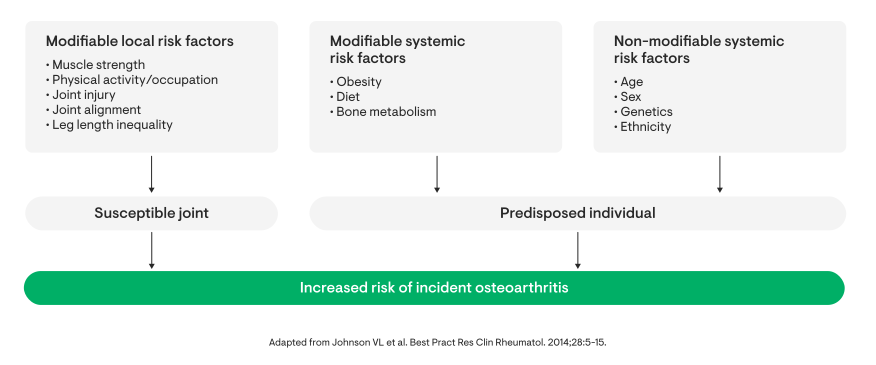
One of the predominant risk factors for osteoarthritis is age, with many people over the age of 65 presenting with radiographic changes in one or more joints.1 Obesity is another risk factor for osteoarthritis as a result of the increased biomechanical loading of joints and low-grade systemic inflammation caused by adipokine secretion.1 Knee injury is the major cause of osteoarthritis in young adults, increasing the risk 4-fold.1 There is also an inherited risk associated with osteoarthritis, which includes over 80 gene mutations or single-nucleotide polymorphisms involved in its pathogenesis.1
Potential risk factors for susceptibility to osteoarthritis incidence, each with differing degrees to support the association⁹

Aging

Obesity

Sports injury

Inflammation

Genetic predisposition
Osteoarthritis is a progressive disease in which symptoms develop and worsen over time. The onset is often insidious, beginning in one or a few joints, with frequent asymmetry of symptoms.4 Signs and symptoms of osteoarthritis include painful joints, stiffness, swelling and instability. The affected area can present as swollen and enlarged.3,4
Signs and symptoms, and sites commonly affected by osteoarthritis⁴

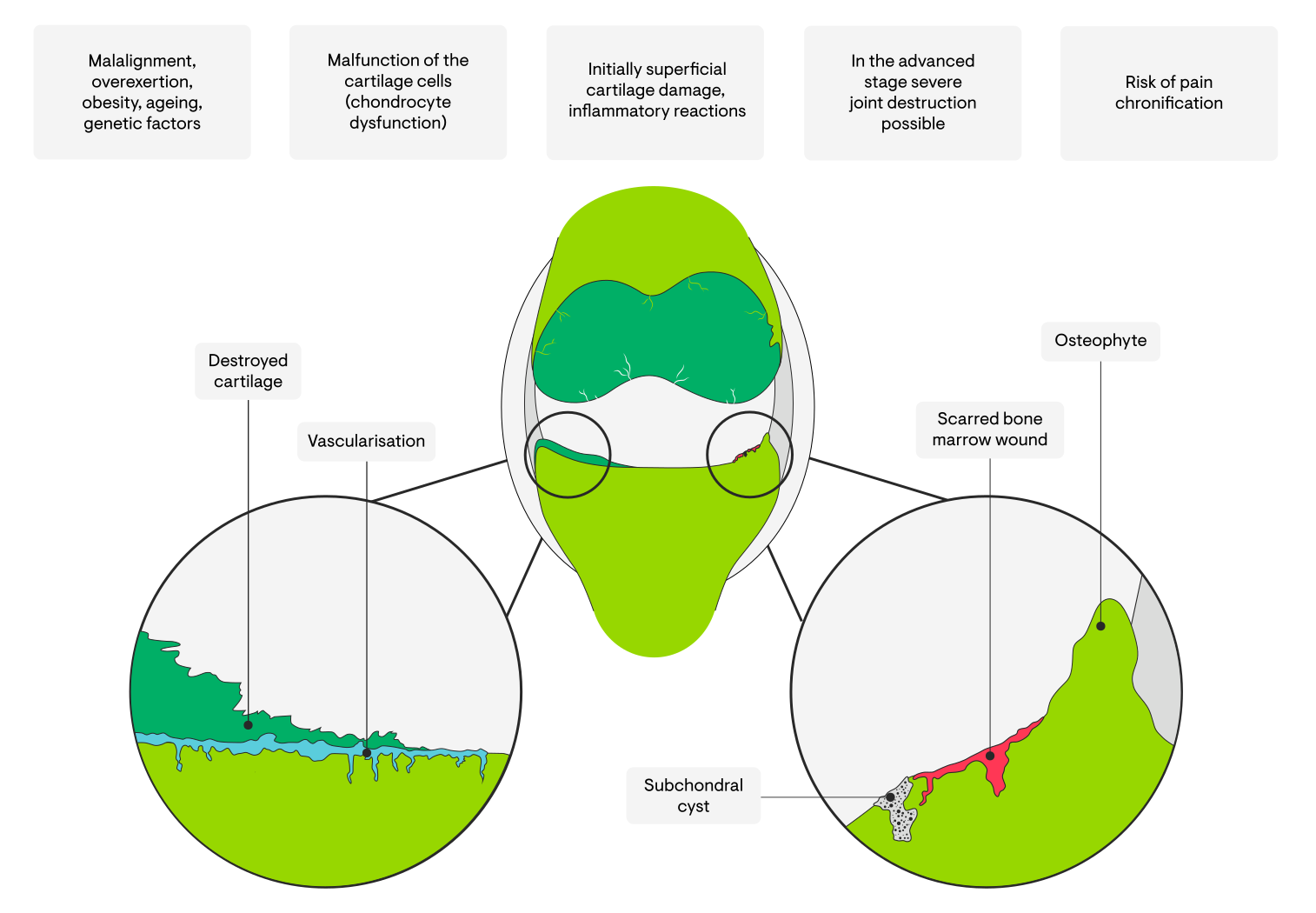
Osteoarthritis was once considered to be a disease of the cartilage, but research has since shown that it does, in fact, involve the whole joint.9 Loss of cartilage precedes a number of cellular changes and the altered biomechanics lead to secondary changes, which include bone remodelling, osteophyte formation, lesions, meniscal tears and extrusion, as well as changes in the synovium, joint capsule, ligaments and periarticular muscles.3
Articular cartilage is composed of extracellular matrix (water, collagen, proteoglycans and calcium salt) and chondrocytes.10 Chondrocytes mediate the turnover of matrix components. In osteoarthritis, chondrocytes fail to maintain the balance between synthesis and degradation of extracellular matrix components.10
A trauma causing a microfracture or inflammation causes release of so-called ‘wear’ particles, which are engulfed by resident macrophages.10 Wear particles stimulate chondrocytes to release degradative enzymes and disrupt the joint homeostasis.10 The breakdown of collagen and proteoglycan stimulates the release of inflammatory cytokines including tumour necrosis factor-α, interleukin (IL)-1 and IL-6, which bind to chondrocyte receptors and stimulate further cartilage degradation.10 The disruption to homeostasis results in increased water and decreased proteoglycan content of the extracellular matrix, and apoptosis of chondrocytes. In time, articular cartilage is destroyed, leaving the underlying bone plate exposed.10
Overview of the stages of development in osteoarthritis⁴
Physical exams

Meniscus tests – Ligament stability – Gait analysis
X-rays

Other imaging techniques

Computed tomography – Ultrasound – Magnetic resonance imaging
Guidelines and recommendations
There is no treatment to stop or reverse the effects of osteoarthritis, although there are various methods to reduce pain and increase movement.4 Such management options include paracetamol/acetaminophen and NSAIDs to lessen pain.5,6
Physical therapy is used to strengthen the muscles around the joint and increase flexibility, while occupational therapy may also help patients to perform everyday tasks without pain. For the treatment of more severe osteoarthritis, intra-articular corticosteroid injections may be given.5 Surgery should only be considered in cases where symptoms cannot be adequately managed with more conservative treatment modalities.4 Glucosamine and chondroitin are also alternative treatment options.5,13
Treatment options for osteoarthritis4-6,14
| Medicines | Rehabilitative therapies | Surgical procedures | Lifestyle modifications | Alternative treatments | Devices/ supportive materials |
|---|---|---|---|---|---|
|
|
|
|
|
|
COX-2 cyclooxygenase-2; NSAID non-steroidal anti-inflammatory drug
Pharmacological treatments
Traditionally, pain in osteoarthritis was thought to be purely nociceptive; however, screening tools such as the PainDETECT Questionnaire suggest that a neuropathic component may sometimes be present.15 Psychophysical and neuroimaging data have revealed that some patients with osteoarthritis also experience neuropathic-like pain associated with central sensitisation.15 A trend towards worse outcomes following knee replacement surgery due to osteoarthritis has been observed in this subset of patients with neuropathic‐like pain, when compared with a nociceptive pain group.15
The deeper understanding of the multi-mechanistic nature of osteoarthritis pain has led to the use of centrally acting medicines that may have a benefit of alleviating pain due to osteoarthritis.16 The recognition of subsets of individuals with pain that is refractory to peripherally based treatment, and likely to be centrally mediated, may identify eligible candidates for alternative therapies targeting modulation of central pain pathways.16
There remains a need for alternative approaches to combat pain and inflammation in osteoarthritis. Current treatment approaches focus on managing pain and helping patients find ways to modify their lifestyle to cope with the symptoms of osteoarthritis.17 Pharmacological treatment for osteoarthritis commonly involves the use of NSAIDs or cyclooxygenase-2 inhibitors, which can have negative gastrointestinal and cardiovascular side effects, as well as a negative impact on kidney function.17 Co-prescription with a proton pump inhibitor is therefore recommended to provide potent and long-lasting inhibition of gastric acid secretion and to heal NSAID-associated ulcers, even if NSAIDs are continued.18,19
The use of DMARDs in osteoarthritis is an approach under investigation that is aimed at slowing, halting and reversing disease progression, and even preventing disease development.7 However, there are numerous challenges over target identification and clinical development.4
Epidemiology
One of the predominant risk factors for osteoarthritis is age, with many people over the age of 65 presenting with radiographic changes in one or more joints.1 Obesity is another risk factor for osteoarthritis as a result of the increased biomechanical loading of joints and low-grade systemic inflammation caused by adipokine secretion.1 Knee injury is the major cause of osteoarthritis in young adults, increasing the risk 4-fold.1 There is also an inherited risk associated with osteoarthritis, which includes over 80 gene mutations or single-nucleotide polymorphisms involved in its pathogenesis.1
Potential risk factors for susceptibility to osteoarthritis incidence, each with differing degrees to support the association⁹
Aging
Obesity
Sports injury
Inflammation
Genetic predisposition
Osteoarthritis is a progressive disease in which symptoms develop and worsen over time. The onset is often insidious, beginning in one or a few joints, with frequent asymmetry of symptoms.4 Signs and symptoms of osteoarthritis include painful joints, stiffness, swelling and instability. The affected area can present as swollen and enlarged.3,4
Signs and symptoms, and sites commonly affected by osteoarthritis⁴
Osteoarthritis was once considered to be a disease of the cartilage, but research has since shown that it does, in fact, involve the whole joint.9 Loss of cartilage precedes a number of cellular changes and the altered biomechanics lead to secondary changes, which include bone remodelling, osteophyte formation, lesions, meniscal tears and extrusion, as well as changes in the synovium, joint capsule, ligaments and periarticular muscles.3
Articular cartilage is composed of extracellular matrix (water, collagen, proteoglycans and calcium salt) and chondrocytes.10 Chondrocytes mediate the turnover of matrix components. In osteoarthritis, chondrocytes fail to maintain the balance between synthesis and degradation of extracellular matrix components.10
A trauma causing a microfracture or inflammation causes release of so-called ‘wear’ particles, which are engulfed by resident macrophages.10 Wear particles stimulate chondrocytes to release degradative enzymes and disrupt the joint homeostasis.10 The breakdown of collagen and proteoglycan stimulates the release of inflammatory cytokines including tumour necrosis factor-α, interleukin (IL)-1 and IL-6, which bind to chondrocyte receptors and stimulate further cartilage degradation.10 The disruption to homeostasis results in increased water and decreased proteoglycan content of the extracellular matrix, and apoptosis of chondrocytes. In time, articular cartilage is destroyed, leaving the underlying bone plate exposed.10
Overview of the stages of development in osteoarthritis⁴
Physical exams
Meniscus tests – Ligament stability – Gait analysis
X-rays
Other imaging techniques
Computed tomography – Ultrasound – Magnetic resonance imaging
Guidelines and recommendations
There is no treatment to stop or reverse the effects of osteoarthritis, although there are various methods to reduce pain and increase movement.4 Such management options include paracetamol/acetaminophen and NSAIDs to lessen pain.5,6
Physical therapy is used to strengthen the muscles around the joint and increase flexibility, while occupational therapy may also help patients to perform everyday tasks without pain. For the treatment of more severe osteoarthritis, intra-articular corticosteroid injections may be given.5 Surgery should only be considered in cases where symptoms cannot be adequately managed with more conservative treatment modalities.4 Glucosamine and chondroitin are also alternative treatment options.5,13
Treatment options for osteoarthritis4-6,14
| Medicines | Rehabilitative therapies | Surgical procedures | Lifestyle modifications | Alternative treatments | Devices/ supportive materials |
|---|---|---|---|---|---|
|
|
|
|
|
|
COX-2 cyclooxygenase-2; NSAID non-steroidal anti-inflammatory drug
Pharmacological treatments
Traditionally, pain in osteoarthritis was thought to be purely nociceptive; however, screening tools such as the PainDETECT Questionnaire suggest that a neuropathic component may sometimes be present.15 Psychophysical and neuroimaging data have revealed that some patients with osteoarthritis also experience neuropathic-like pain associated with central sensitisation.15 A trend towards worse outcomes following knee replacement surgery due to osteoarthritis has been observed in this subset of patients with neuropathic‐like pain, when compared with a nociceptive pain group.15
The deeper understanding of the multi-mechanistic nature of osteoarthritis pain has led to the use of centrally acting medicines that may have a benefit of alleviating pain due to osteoarthritis.16 The recognition of subsets of individuals with pain that is refractory to peripherally based treatment, and likely to be centrally mediated, may identify eligible candidates for alternative therapies targeting modulation of central pain pathways.16
There remains a need for alternative approaches to combat pain and inflammation in osteoarthritis. Current treatment approaches focus on managing pain and helping patients find ways to modify their lifestyle to cope with the symptoms of osteoarthritis.17 Pharmacological treatment for osteoarthritis commonly involves the use of NSAIDs or cyclooxygenase-2 inhibitors, which can have negative gastrointestinal and cardiovascular side effects, as well as a negative impact on kidney function.17 Co-prescription with a proton pump inhibitor is therefore recommended to provide potent and long-lasting inhibition of gastric acid secretion and to heal NSAID-associated ulcers, even if NSAIDs are continued.18,19
The use of DMARDs in osteoarthritis is an approach under investigation that is aimed at slowing, halting and reversing disease progression, and even preventing disease development.7 However, there are numerous challenges over target identification and clinical development.4