

Neuropathic back pain
Key Pain Conditions
Chronic back pain is often a mixed pain syndrome, arising from nociceptive and/or neuropathic pain.4,10 Studies indicate the presence of a neuropathic pain component in 5–55% of patients with chronic back pain.4 Pain in the back is the most common pain condition reported by patients with neuropathic pain, with chronic lumbar radicular pain affecting 20–35% of patients with back pain.7
NBP is associated with an increased likelihood and severity of medical comorbidities as well as higher healthcare costs compared with back pain without a neuropathic component.4 An analysis of a US claims database found that the mean annual per-patient cost of care was approximately 160% higher in patients with NBP than those without neuropathic pain.11
Pain conditions reported by people with neuropathic pain in European countries7
| Pain conditions reported | Persons reporting neuropathic pain(%) |
|---|---|
| Back pain | 59.30 |
| Joint pain | 57.45 |
| Shoulder pain/stiffness | 40.96 |
| Neck pain | 35.48 |
| Headache | 31.27 |
| Arthritis pain | 24.54 |
| Migraine | 17.04 |
| Fibromyalgia pain | 13.30 |
| Dental problems | 12.48 |
| Surgery or medical procedure pain | 11.84 |
| Other | 7.99 |
| Sprains or strains pain | 6.57 |
| Pain during menstrual cycle | 5.93 |
| Broken bone pain | 4.08 |
| Cancer pain | 1.30 |
| Post-herpetic neuralgia pain | 1.27 |
| Persons only reporting neuropathic pain | 17.44 |
There are many potential risk factors that contribute to NBP as it can arise from different underlying diseases, conditions or injuries. It is known that neuropathic pain is more frequent in women and people >50 years of age.12 Psychological factors also play a role in the development of chronic back pain.13
[You can read more about the risk factors for chronic low back pain here and for peripheral neuropathic pain here.]
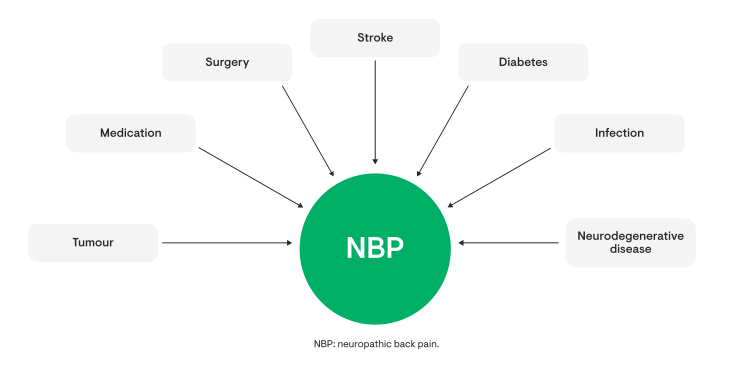
Neuropathic pain is defined as pain caused by a lesion or disease of the somatosensory nervous system.14,15 The cause of NBP can arise from a number of different sources.7 Chronic pain also occurs in neurological conditions of unknown aetiology, i.e. idiopathic neuropathies.6 Conditions or events contributing to the somatosensory lesion may include:4,6,7,16
- Tumours compressing a peripheral nerve or the spinal cord
- Physical injury such as a prolapsed or herniated disc and sprained muscular conditions
- Surgery that leads to failed back surgery syndrome
- Pain arising post-stroke
- Comorbidities such as diabetes
- Local or systemic inflammation
- Viral infection such as herpes zoster
- Neurodegenerative diseases such as multiple sclerosis
Potential causes of neuropathic back pain (NBP)⁶
Spontaneous pain

Arising without stimulus
Allodynia

Abnormal response to non-painful stimuli
Hyperalgesia

Exaggerated response to painful stimulli
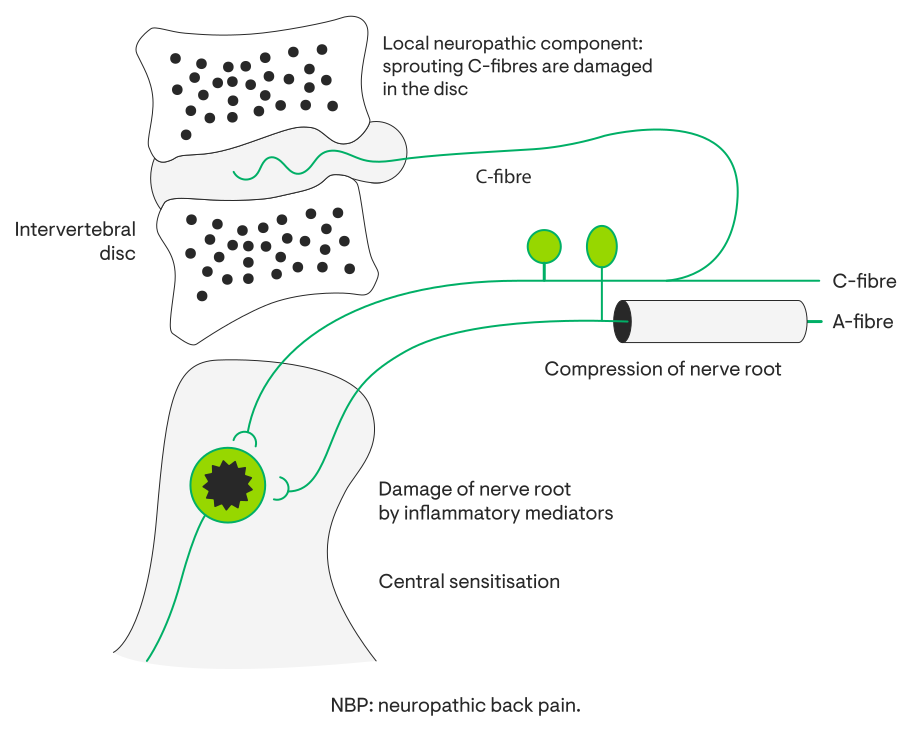
The precise mechanisms of neuropathic pain are not completely understood. In chronic back pain, neuropathic pain may be caused by several mechanisms in the spinal axis:4,16
- Lesions of nociceptive sprouts within a degenerated disc
- Mechanical compression of the nerve root
- Effects of inflammatory mediators arising from a degenerative disc that result in inflammation and damage to the nerve roots
Pain may arise from mechanical stress, which stimulates production of inflammatory agents such as cytokines and chemokines.16 Inflammatory mediators may reach nerve fibres that are not mechanically affected.16 In addition, sensitisation of the peripheral nerves or roots may lead to secondary sensitisation of spinal cord neurons, amplifying abnormal pain processes.16
Proposed pathophysiological mechanism of neuropathic back pain (NBP)¹⁶
According to the International Classification of Diseases 11th Revision (ICD-11), the diagnosis of chronic NBP requires a history of nervous system injury or disease and a neuroanatomically plausible distribution of the pain.6 Sensory signs and symptoms such as decreased or loss of sensation, allodynia or hyperalgesia, indicating the involvement of the somatosensory nervous system, must be compatible with the area of the affected nervous structure.6
Clinical examination of a patient with suspected NBP should investigate possible sites of an underlying somatosensory lesion.7 This will inform further diagnostic investigations, such as electrodiagnostic techniques, myelography, computed tomography and magnetic resonance imaging, to identify causative pathologies within the nervous system.7
Tools such as the PainDETECT questionnaire have been used to demonstrate clinical characteristics that differentiate the neuropathic component of chronic back pain from other types of pain (i.e. nociceptive).17
[Learn more about screening tools for neuropathic pain in the article on peripheral neuropathic pain]
Overview of screening tools used for detection of neuropathic pain in back pain4
| Assessment | ID Pain | NPQ | PainDETECT | LANSS | DN4 | SteP |
|---|---|---|---|---|---|---|
Symptoms reported | ||||||
| Persistent pain | – | – | ||||
| Pricking, tingling, pins and needles | + | + | + | + | + | + |
| Electric shocks or shooting | + | +/=* | + | + | + | |
| Hot or burning | + | + | + | + | + | – |
| Numbness | + | + | + | + | ||
| Pain evoked by light touching | + | + | + | + | ||
| Painful cold or freezing pain | + | + | – | |||
| Squeezing pain | – | |||||
| Pain evoked by mild pressure | + | |||||
| Pain evoked by heat or cold | + | |||||
| Pain evoked by changes in weather | – | |||||
| Pain limited to joints | – | |||||
| Itching | + | + | ||||
| Discrete pain attacks | + | |||||
| Radiation of pain | + | |||||
| Autonomic changes | + | |||||
Physical examination | ||||||
| Temporal summation | – | |||||
| Abnormal response to cold | + | |||||
| Abnormal response to blunt pressure | + | |||||
| Abnormal response to vibration | + | |||||
| Brush allodynia | + | + | – | |||
| Raised soft-touch threshold | + | |||||
| Raised pinprick threshold | + | + | + | |||
| Straight leg-raised test | + | |||||
| Skin changes | – | |||||
*In the NPQ tool ‘Electric pain’ reduced the likelihood of patient having neuropathic pain but ’Shooting pain‘ increased the likelihood.
A plus sign (+) indicates an item (symptom/examination finding) that increases the chance of a patient having neuropathic pain, rather than non-neuropathic pain, according to the given screening tool. A minus sign (-) indicates an item that decreases that likelihood.
DN4: Doleur Neuropathique 4; ID Pain: Identificaiton Pain questionnaire; LANSS: Leeds assessment of Neuropathic Symptoms and Signs; NPQ: Neuropathic Pain Questionnaire; StEP: Standardised Evaluation of Pain.
Guidelines and recommendations
Guidelines for chronic back pain and neuropathic pain typically do not include recommendations specifically for NBP, and there is no standardised algorithm for identifying NBP.4 The UK’s National Institute for Health and Care Excellence (NICE) and the Belgian Health Care Knowledge Centre have developed guidelines for the management of sciatica and radicular pain, respectively:18,19
- Low back pain and sciatica in over 16s: Assessment and management
- Low back pain and radicular pain: Assessment and management
Treatment must be personalised based the characteristics of each patient’s condition, including their symptoms, comorbidities, risk profile and cost.4 Multimodal management of chronic back pain, combining pharmacological therapies for symptomatic relief with non-pharmacological approaches, such as physical activity and psychosocial/behavioural interventions, is generally recommended.4
Pharmacological treatments
Guidance on the use of paracetamol for managing back pain, either alone or in combination with other agents, varies between guidelines.4,5,10,18,19 Non-steroidal anti-inflammatory drugs are also commonly used for back pain but these provide little relief of a neuropathic pain component.4,5 Benzodiazepines, systemic corticosteroids, antidepressant medications, anti-epileptic drugs, skeletal muscle relaxants and opioid analgesics are also prescribed.4,10 Monotherapy with most of these agents typically provides only limited relief of neuropathic pain.10 Evidence suggests that some opioid and topical analgesics may be effective in NBP in defined patient populations, but more well-designed trials are needed.4
[Please refer to the section on chronic low back pain for details of recommended treatment options for NBP.]
Pharmacological treatment options and their effectiveness across different cLBP types20
| Drug class | Effective in nociceptive pain | Effective in neuropathic pain | Effective alone in neuropathic cLBP | Effective in combination in neuropathic cLBP |
|---|---|---|---|---|
| Paracetamol | ✓ | ✘ | ✘ | ✓** |
| NSAIDs | ✓ | ✘ | ✘ | ✓** |
| Opioids | ✓ | ✓ | ✓ | ✓** |
| Antidepressants | ✘ | ✓ | ✓* | |
| Anticonvulsants | ✘ | ✓ | ✘ | ✓** |
| ✓ effective | ✘ not effective | |||
Data available for: * one product only; ** one combination only
cLBP: chronic low back pain; NSAID: non-steroidal anti-inflammatory drug.
Adapted from Morlion B. Curr Med Res Opin. 2011; 27:11-33.
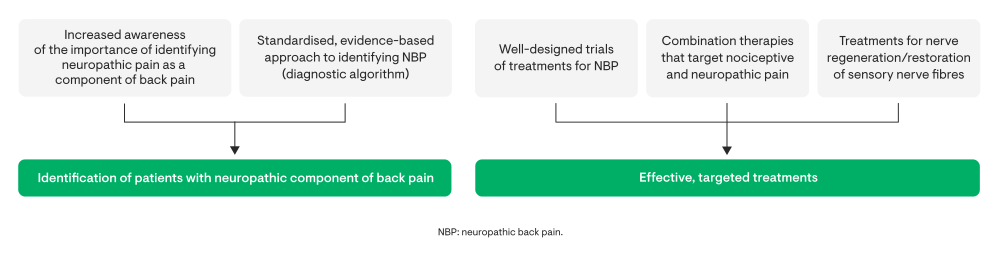
The neuropathic component of back pain is under-recognised, under-treated and difficult to manage.4 Experts point out a lack of standardised recommendations for diagnosis of the neuropathic component of back pain, and of specific guidelines on its management.4
There is a need for improved treatment options for the management of the neuropathic component of chronic back pain, particularly as patients with a neuropathic component have disproportionately higher healthcare costs (vs those without neuropathic pain).4,11 Unfortunately, few clinical trials have investigated important aspects of back pain management including nerve regeneration/restoration of sensory nerve fibres (i.e. disease modification), the suitability of combinations that target nociceptive and neuropathic pain, or head-to-head comparisons of treatments.4,10,21 Well-designed trials could help to inform algorithms for the diagnosis and treatment of NBP, and to explore the use of combination therapies to improve patient outcomes.5
Unmet needs in the management of neuropathic back pain (NBP)⁴
Epidemiology
Chronic back pain is often a mixed pain syndrome, arising from nociceptive and/or neuropathic pain.4,10 Studies indicate the presence of a neuropathic pain component in 5–55% of patients with chronic back pain.4 Pain in the back is the most common pain condition reported by patients with neuropathic pain, with chronic lumbar radicular pain affecting 20–35% of patients with back pain.7
NBP is associated with an increased likelihood and severity of medical comorbidities as well as higher healthcare costs compared with back pain without a neuropathic component.4 An analysis of a US claims database found that the mean annual per-patient cost of care was approximately 160% higher in patients with NBP than those without neuropathic pain.11
Pain conditions reported by people with neuropathic pain in European countries7
| Pain conditions reported | Persons reporting neuropathic pain(%) |
|---|---|
| Back pain | 59.30 |
| Joint pain | 57.45 |
| Shoulder pain/stiffness | 40.96 |
| Neck pain | 35.48 |
| Headache | 31.27 |
| Arthritis pain | 24.54 |
| Migraine | 17.04 |
| Fibromyalgia pain | 13.30 |
| Dental problems | 12.48 |
| Surgery or medical procedure pain | 11.84 |
| Other | 7.99 |
| Sprains or strains pain | 6.57 |
| Pain during menstrual cycle | 5.93 |
| Broken bone pain | 4.08 |
| Cancer pain | 1.30 |
| Post-herpetic neuralgia pain | 1.27 |
| Persons only reporting neuropathic pain | 17.44 |
There are many potential risk factors that contribute to NBP as it can arise from different underlying diseases, conditions or injuries. It is known that neuropathic pain is more frequent in women and people >50 years of age.12 Psychological factors also play a role in the development of chronic back pain.13
[You can read more about the risk factors for chronic low back pain here and for peripheral neuropathic pain here.]
Neuropathic pain is defined as pain caused by a lesion or disease of the somatosensory nervous system.14,15 The cause of NBP can arise from a number of different sources.7 Chronic pain also occurs in neurological conditions of unknown aetiology, i.e. idiopathic neuropathies.6 Conditions or events contributing to the somatosensory lesion may include:4,6,7,16
- Tumours compressing a peripheral nerve or the spinal cord
- Physical injury such as a prolapsed or herniated disc and sprained muscular conditions
- Surgery that leads to failed back surgery syndrome
- Pain arising post-stroke
- Comorbidities such as diabetes
- Local or systemic inflammation
- Viral infection such as herpes zoster
- Neurodegenerative diseases such as multiple sclerosis
Potential causes of neuropathic back pain (NBP)⁶
Spontaneous pain
Arising without stimulus
Allodynia
Abnormal response to non-painful stimuli
Hyperalgesia
Exaggerated response to painful stimulli
The precise mechanisms of neuropathic pain are not completely understood. In chronic back pain, neuropathic pain may be caused by several mechanisms in the spinal axis:4,16
- Lesions of nociceptive sprouts within a degenerated disc
- Mechanical compression of the nerve root
- Effects of inflammatory mediators arising from a degenerative disc that result in inflammation and damage to the nerve roots
Pain may arise from mechanical stress, which stimulates production of inflammatory agents such as cytokines and chemokines.16 Inflammatory mediators may reach nerve fibres that are not mechanically affected.16 In addition, sensitisation of the peripheral nerves or roots may lead to secondary sensitisation of spinal cord neurons, amplifying abnormal pain processes.16
Proposed pathophysiological mechanism of neuropathic back pain (NBP)¹⁶
According to the International Classification of Diseases 11th Revision (ICD-11), the diagnosis of chronic NBP requires a history of nervous system injury or disease and a neuroanatomically plausible distribution of the pain.6 Sensory signs and symptoms such as decreased or loss of sensation, allodynia or hyperalgesia, indicating the involvement of the somatosensory nervous system, must be compatible with the area of the affected nervous structure.6
Clinical examination of a patient with suspected NBP should investigate possible sites of an underlying somatosensory lesion.7 This will inform further diagnostic investigations, such as electrodiagnostic techniques, myelography, computed tomography and magnetic resonance imaging, to identify causative pathologies within the nervous system.7
Tools such as the PainDETECT questionnaire have been used to demonstrate clinical characteristics that differentiate the neuropathic component of chronic back pain from other types of pain (i.e. nociceptive).17
[Learn more about screening tools for neuropathic pain in the article on peripheral neuropathic pain]
Overview of screening tools used for detection of neuropathic pain in back pain4
| Assessment | ID Pain | NPQ | PainDETECT | LANSS | DN4 | SteP |
|---|---|---|---|---|---|---|
Symptoms reported | ||||||
| Persistent pain | – | – | ||||
| Pricking, tingling, pins and needles | + | + | + | + | + | + |
| Electric shocks or shooting | + | +/=* | + | + | + | |
| Hot or burning | + | + | + | + | + | – |
| Numbness | + | + | + | + | ||
| Pain evoked by light touching | + | + | + | + | ||
| Painful cold or freezing pain | + | + | – | |||
| Squeezing pain | – | |||||
| Pain evoked by mild pressure | + | |||||
| Pain evoked by heat or cold | + | |||||
| Pain evoked by changes in weather | – | |||||
| Pain limited to joints | – | |||||
| Itching | + | + | ||||
| Discrete pain attacks | + | |||||
| Radiation of pain | + | |||||
| Autonomic changes | + | |||||
Physical examination | ||||||
| Temporal summation | – | |||||
| Abnormal response to cold | + | |||||
| Abnormal response to blunt pressure | + | |||||
| Abnormal response to vibration | + | |||||
| Brush allodynia | + | + | – | |||
| Raised soft-touch threshold | + | |||||
| Raised pinprick threshold | + | + | + | |||
| Straight leg-raised test | + | |||||
| Skin changes | – | |||||
*In the NPQ tool ‘Electric pain’ reduced the likelihood of patient having neuropathic pain but ’Shooting pain‘ increased the likelihood.
A plus sign (+) indicates an item (symptom/examination finding) that increases the chance of a patient having neuropathic pain, rather than non-neuropathic pain, according to the given screening tool. A minus sign (-) indicates an item that decreases that likelihood.
DN4: Doleur Neuropathique 4; ID Pain: Identificaiton Pain questionnaire; LANSS: Leeds assessment of Neuropathic Symptoms and Signs; NPQ: Neuropathic Pain Questionnaire; StEP: Standardised Evaluation of Pain.
Guidelines and recommendations
Guidelines for chronic back pain and neuropathic pain typically do not include recommendations specifically for NBP, and there is no standardised algorithm for identifying NBP.4 The UK’s National Institute for Health and Care Excellence (NICE) and the Belgian Health Care Knowledge Centre have developed guidelines for the management of sciatica and radicular pain, respectively:18,19
- Low back pain and sciatica in over 16s: Assessment and management
- Low back pain and radicular pain: Assessment and management
Treatment must be personalised based the characteristics of each patient’s condition, including their symptoms, comorbidities, risk profile and cost.4 Multimodal management of chronic back pain, combining pharmacological therapies for symptomatic relief with non-pharmacological approaches, such as physical activity and psychosocial/behavioural interventions, is generally recommended.4
Pharmacological treatments
Guidance on the use of paracetamol for managing back pain, either alone or in combination with other agents, varies between guidelines.4,5,10,18,19 Non-steroidal anti-inflammatory drugs are also commonly used for back pain but these provide little relief of a neuropathic pain component.4,5 Benzodiazepines, systemic corticosteroids, antidepressant medications, anti-epileptic drugs, skeletal muscle relaxants and opioid analgesics are also prescribed.4,10 Monotherapy with most of these agents typically provides only limited relief of neuropathic pain.10 Evidence suggests that some opioid and topical analgesics may be effective in NBP in defined patient populations, but more well-designed trials are needed.4
[Please refer to the section on chronic low back pain for details of recommended treatment options for NBP.]
Pharmacological treatment options and their effectiveness across different cLBP types20
| Drug class | Effective in nociceptive pain | Effective in neuropathic pain | Effective alone in neuropathic cLBP | Effective in combination in neuropathic cLBP |
|---|---|---|---|---|
| Paracetamol | ✓ | ✘ | ✘ | ✓** |
| NSAIDs | ✓ | ✘ | ✘ | ✓** |
| Opioids | ✓ | ✓ | ✓ | ✓** |
| Antidepressants | ✘ | ✓ | ✓* | |
| Anticonvulsants | ✘ | ✓ | ✘ | ✓** |
| ✓ effective | ✘ not effective | |||
Data available for: * one product only; ** one combination only
cLBP: chronic low back pain; NSAID: non-steroidal anti-inflammatory drug.
Adapted from Morlion B. Curr Med Res Opin. 2011; 27:11-33.
The neuropathic component of back pain is under-recognised, under-treated and difficult to manage.4 Experts point out a lack of standardised recommendations for diagnosis of the neuropathic component of back pain, and of specific guidelines on its management.4
There is a need for improved treatment options for the management of the neuropathic component of chronic back pain, particularly as patients with a neuropathic component have disproportionately higher healthcare costs (vs those without neuropathic pain).4,11 Unfortunately, few clinical trials have investigated important aspects of back pain management including nerve regeneration/restoration of sensory nerve fibres (i.e. disease modification), the suitability of combinations that target nociceptive and neuropathic pain, or head-to-head comparisons of treatments.4,10,21 Well-designed trials could help to inform algorithms for the diagnosis and treatment of NBP, and to explore the use of combination therapies to improve patient outcomes.5
Unmet needs in the management of neuropathic back pain (NBP)⁴