

Complex regional pain syndrome
Key Pain Conditions

The precise prevalence of CRPS is difficult to determine; recent results from major epidemiological studies suggest that the incidence is between 5.5 and 26.2 cases per 100,000 people per year.6 Variations in these figures may occur as a result of differential diagnostic criteria and difficulties in diagnosing this complex condition. CRPS appears to occur more frequently in women aged between 40 and 60 years6 and the majority of patients present with CRPS type 1.7 Data on the most common localisation of pain are scarce.
Epidemiology of CRPS type 1 and 27
| Study | Ott et al. 2018 |
|---|---|
| Data collection | Retrospective review of medical records |
| Country | Germany |
| Total no. with CRPS | 1,043 |
| CRPS type 1, % | 88 |
| CRPS type 2, % | 12 |
| Age | 50.9 years (average) |
| Female, n (%) | 743 (71) |

Female sex⁹ ¹⁰

Caucasian race⁹

Higher median household income⁹

Depression⁹
Headache⁹

Drug abuse⁹

Severity of pain¹¹
Reaction time (to recognise image of limb affected by pain)¹¹
Dysynchiria (feeling of pain in affected limb if unaffected contralateral limb is touched)¹¹
Swelling¹¹

Severity of injury¹⁰

High energy injury¹⁰
Fractures
Sprains/Strains

Soft tissue injury (e.g. burns, cuts, bruises)
Surgery

Minor medical procedures (e.g., needle stick)
Limb immobilisation (e.g., being in a cast)
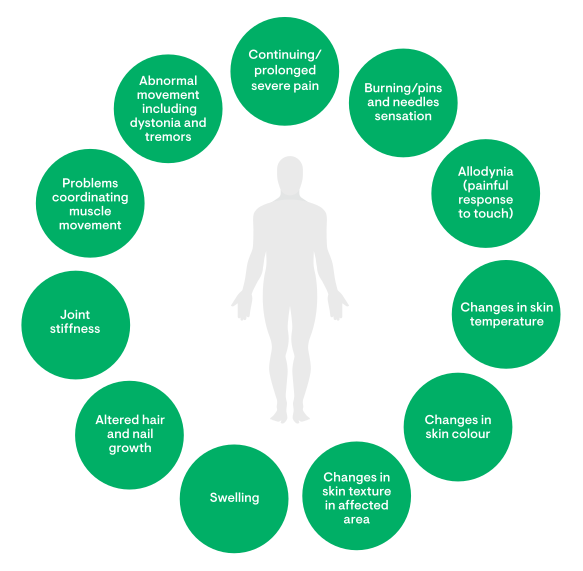
The key symptom of CRPS is continuing pain, which is disproportionate to any inciting event.2 The pain has been described as ‘burning, stabbing, tingling numbness’, ‘pins and needles’, ‘electric shock’ or as if somebody were squeezing the limb in question.3,4 The pain can spread to the entire limb and may even affect the opposite extremity.4 Alongside pain, other symptoms include changes in skin temperature, colour or swelling. Other features include changes in skin texture in the affected area, abnormal sweating, changes in nail and hair growth, stiffness in affected joints, problems coordinating muscle movement and abnormal movement in that area.4
Signs and symptoms of CRPS:⁴’⁶
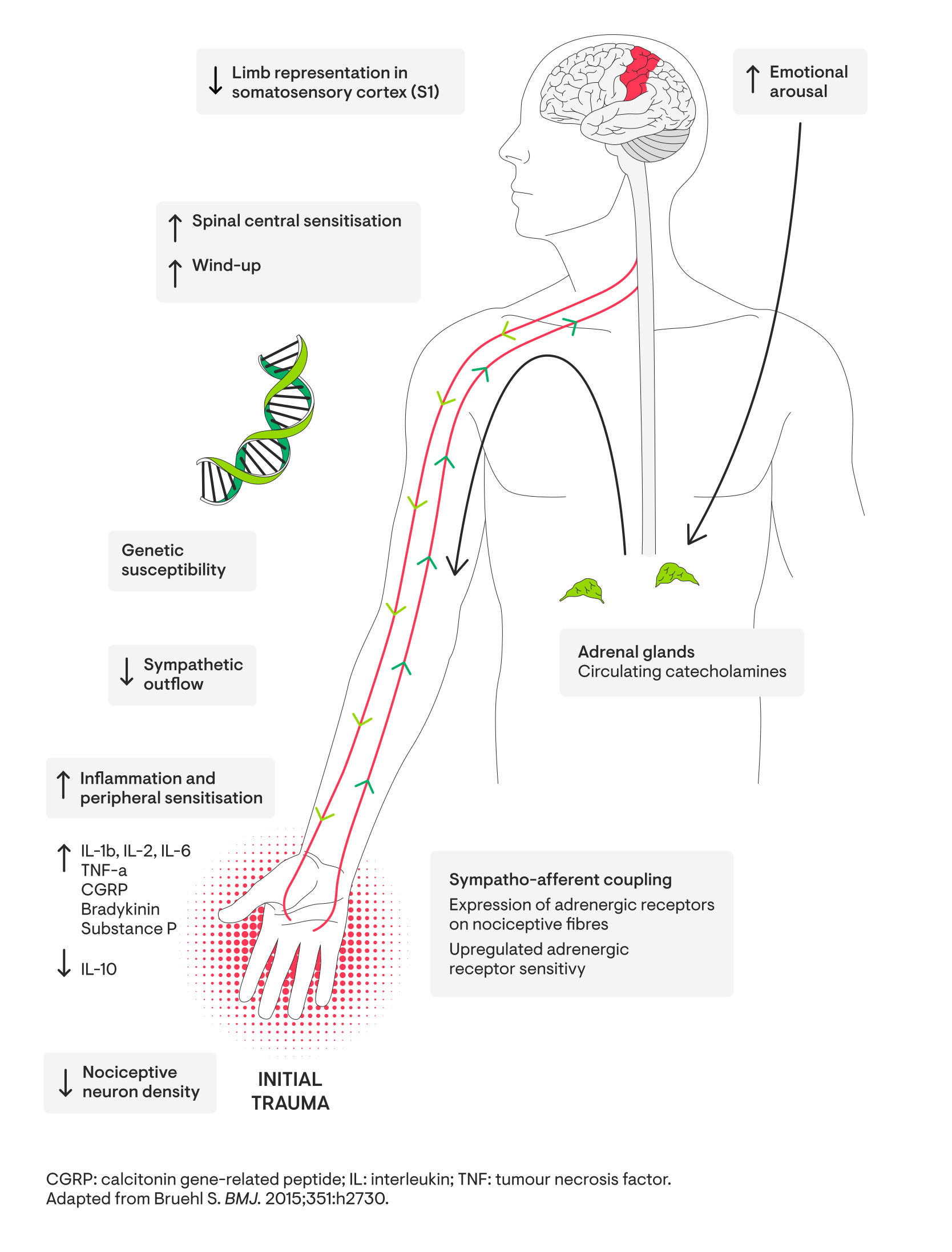
Following the initial trigger, CRPS is characterised by post-traumatic inflammation.6,12 Clinical observations are redness, swelling, hyperthermia, pain and reduced function of the affected limb.6,12 This is accompanied by a complicated immune response that involves proliferation of keratinocytes and production of inflammatory cytokines.6 In response to the original trauma, an exaggerated inflammatory response is triggered in CRPS;12 inflammatory mediators such as cytokines provoke pain and hyperalgesia through the sensitisation of peripheral nociceptors, which in turn facilitate the release of neuropeptides.6
Changes in the central nervous system can be responsible for the longevity of symptoms including allodynia, which is a result of central sensitisation.6 Symptoms can also be attributed to learned processes such as ‘learned non-use’ of the affected limb, as a result of initial pain caused by movement. Thereafter, an increase in pain occurs because of unphysiological movement to avoid pain.6 The peripheral nervous system has also been implicated in CRPS such that peripheral adrenoreceptors develop super-sensitivity and the sympathetic nervous system becomes more activated in the affected limb.6
Speculative model of interacting mechanisms involved in the development of CRPS²
CRPS can be subdivided into two types:1,3
- CRPS type 1 (also known as reflex sympathetic dystrophy), which refers to disease following an injury such as a fracture or sprain but with no confirmed nerve damage
- CRPS type 2 (also known as causalgia), which is triggered by damage to a nerve in the limb.
CRPS is diagnosed using the Budapest criteria such that:4
- Patients must report continuing pain that is disproportionate to the usual pain caused by trauma or any other inciting event.
- Patients must report at least one symptom in three of the four categories listed in the table below.
- Patients must display at least one sign at the time of assessment in two or more of the same four categories listed below.
- Signs and symptoms must not be better explained by another diagnosis.
Budapest clinical diagnostic criteria for CRPS4
| Category | Signs/symptoms | |
|---|---|---|
| A | Sensory | Hyperalgesia (exaggerated pain to a painful stimulus such as pinprick) and/or allodynia (pain elicited by a non-painful stimulus) |
| B | Vasomotor | Skin colour and/or temperature change |
| C | Sudomotor/oedema | Swelling and/or sweating changes or sweating asymmetry |
| D | Motor/trophic | Weakness, tremor, dystonia, decreased range of motion and/or trophic changes/asymmetry involving nails, skin and/or hair. |
Guidelines and recommendations
There is no cure or established standard of care for CRPS and it is a notoriously difficult-to-treat pain condition.3 General treatment guidelines have been published in the Netherlands13 and UK,14 but there is a lack of evidence-based treatment for CRPS management. The UK Royal College of Physicians presents the four pillars of treatment for CRPS: education, pain relief, physical intervention and psychological intervention. Although no drugs are licensed for the treatment of CRPS, there are several classes of medications that have been reported to be effective in CRPS.14 Surgical procedures have been utilised in some cases, but this approach remains controversial.3
Treatment options for CRPS2,3,6
Medications |
|---|
Bisphosphonates |
NSAIDs |
Corticosteroids |
Antidepressants |
Opioids |
NMDA receptor antagonists |
Topical anaesthetics |
Botulinum toxin injections |
Therapy |
|---|
Physical therapy |
Occupational therapy |
Psychotherapy |
Exercise |
Procedures |
|---|
Sympathetic nerve block |
Surgical sympathectomy |
Spinal cord stimulation |
Neurostimulation (e.g. peripheral nerve stimulation, motor cortex stimulation, deep brain stimulation) |
Transcranial magnetic stimulation |
Intrathecal drug pumps |
CRPS: complex reginal pain syndrome; NMDA: N-methyl-D-aspartate; NSAID: non-steroidal anti-inflammatory drug, SSRI: selective serotonin reuptake inhibitor; TCA: tricyclic antidepressant.
Pharmacological and non-pharmacological treatments
Inadequate data are available to guide CRPS treatment solely on the basis of randomised clinical trial data, although trials suggest that the most commonly used intervention (sympathetic blocks) is probably ineffective for the average patient.2 An initial trial of oral corticosteroids is often used in patients with acute phase CRPS to dampen the large inflammatory component believed to be common in the acute phase.2
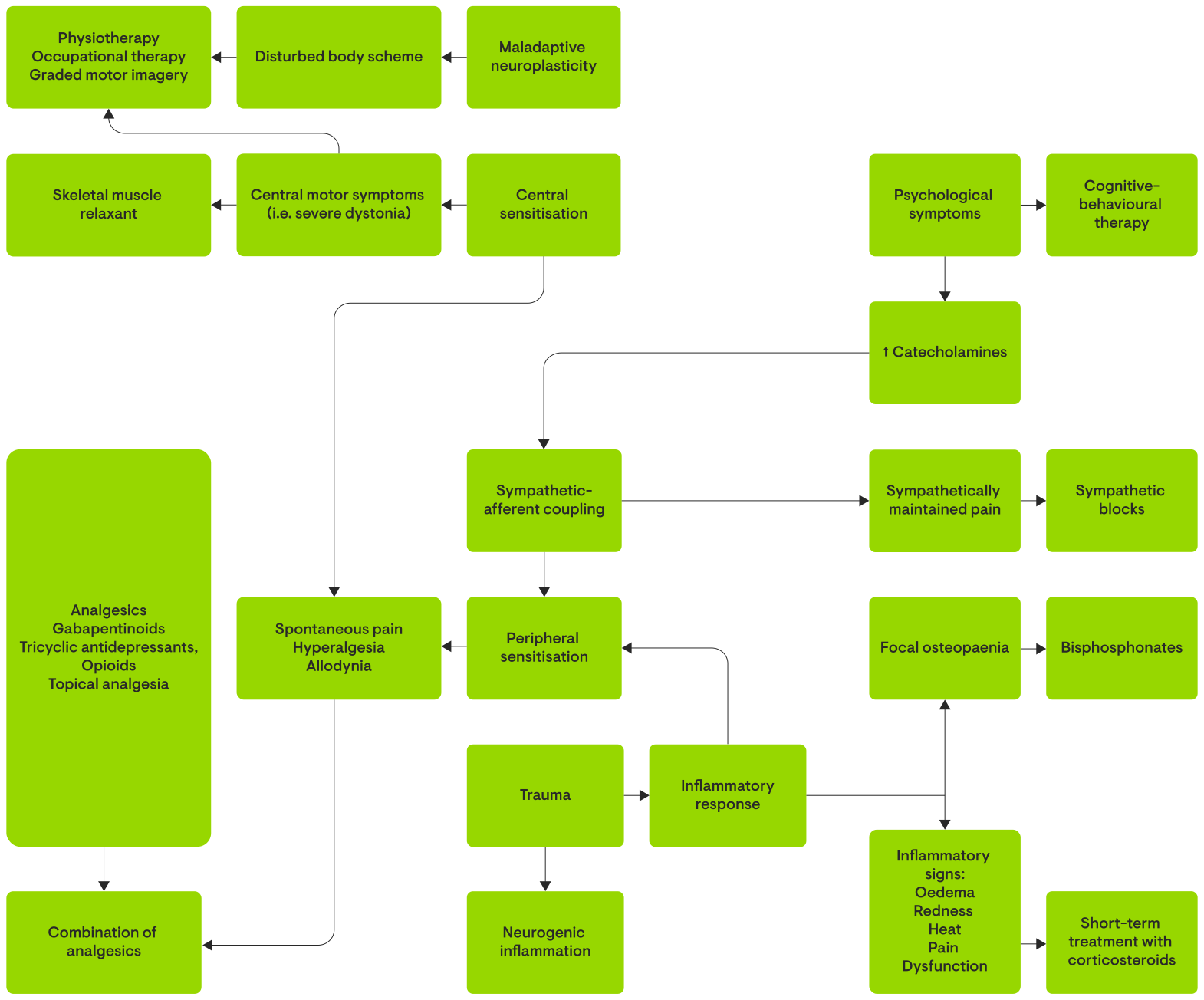
There are many different stages of the pain pathway that can impact CRPS, with trauma leading to inflammatory signs and dysfunction, and central sensitisation that can cause motor symptoms.15 Its management must therefore be multimodal to tackle the disease based on its pathogenic mechanisms and resulting symptoms.15 The algorithm below describes how the mechanisms of CRPS are interlinked and how the resultant treatment can be tailored on this basis.15 For example, physical therapy may be best suited for motor symptoms mediated predominantly by central sensitisation; corticosteroids or bisphosphonates for pain resulting from inflammation; and a combination of analgesics can be used to address spontaneous pain.15
Possible treatment of CRPS on the basis of its pathogenic mechanisms¹⁵
A better understanding of the mechanisms underlying the pathophysiology of CRPS is needed. There is a lack of high-quality, multicentre, randomised controlled trials.6 Most of the available trial data are from single-centre investigations or lack a placebo arm.6 This may be a result of the low numbers of patients suffering from this disease. The National Institute of Neurological Disorders and Stroke, under the National Institutes of Health, is currently undertaking research into the various facets of CRPS pathophysiology – including immune system processes, inflammatory signalling pathways following cast immobilisation, and cellular and molecular changes in sensory neurons following peripheral nerve injury – to understand neuroplasticity and the role of neurotransmitters including adenosine triphosphate.3
Epidemiology
The precise prevalence of CRPS is difficult to determine; recent results from major epidemiological studies suggest that the incidence is between 5.5 and 26.2 cases per 100,000 people per year.6 Variations in these figures may occur as a result of differential diagnostic criteria and difficulties in diagnosing this complex condition. CRPS appears to occur more frequently in women aged between 40 and 60 years6 and the majority of patients present with CRPS type 1.7 Data on the most common localisation of pain are scarce.
Epidemiology of CRPS type 1 and 27
| Study | Ott et al. 2018 |
|---|---|
| Data collection | Retrospective review of medical records |
| Country | Germany |
| Total no. with CRPS | 1,043 |
| CRPS type 1, % | 88 |
| CRPS type 2, % | 12 |
| Age | 50.9 years (average) |
| Female, n (%) | 743 (71) |
Female sex⁹ ¹⁰
Caucasian race⁹
Higher median household income⁹
Depression⁹
Headache⁹
Drug abuse⁹
Severity of pain¹¹
Reaction time (to recognise image of limb affected by pain)¹¹
Dysynchiria (feeling of pain in affected limb if unaffected contralateral limb is touched)¹¹
Swelling¹¹
Severity of injury¹⁰
High energy injury¹⁰
Fractures
Sprains/Strains
Soft tissue injury (e.g. burns, cuts, bruises)
Surgery
Minor medical procedures (e.g., needle stick)
Limb immobilisation (e.g., being in a cast)
The key symptom of CRPS is continuing pain, which is disproportionate to any inciting event.2 The pain has been described as ‘burning, stabbing, tingling numbness’, ‘pins and needles’, ‘electric shock’ or as if somebody were squeezing the limb in question.3,4 The pain can spread to the entire limb and may even affect the opposite extremity.4 Alongside pain, other symptoms include changes in skin temperature, colour or swelling. Other features include changes in skin texture in the affected area, abnormal sweating, changes in nail and hair growth, stiffness in affected joints, problems coordinating muscle movement and abnormal movement in that area.4
Signs and symptoms of CRPS:⁴’⁶
Following the initial trigger, CRPS is characterised by post-traumatic inflammation.6,12 Clinical observations are redness, swelling, hyperthermia, pain and reduced function of the affected limb.6,12 This is accompanied by a complicated immune response that involves proliferation of keratinocytes and production of inflammatory cytokines.6 In response to the original trauma, an exaggerated inflammatory response is triggered in CRPS;12 inflammatory mediators such as cytokines provoke pain and hyperalgesia through the sensitisation of peripheral nociceptors, which in turn facilitate the release of neuropeptides.6
Changes in the central nervous system can be responsible for the longevity of symptoms including allodynia, which is a result of central sensitisation.6 Symptoms can also be attributed to learned processes such as ‘learned non-use’ of the affected limb, as a result of initial pain caused by movement. Thereafter, an increase in pain occurs because of unphysiological movement to avoid pain.6 The peripheral nervous system has also been implicated in CRPS such that peripheral adrenoreceptors develop super-sensitivity and the sympathetic nervous system becomes more activated in the affected limb.6
Speculative model of interacting mechanisms involved in the development of CRPS²
CRPS can be subdivided into two types:1,3
- CRPS type 1 (also known as reflex sympathetic dystrophy), which refers to disease following an injury such as a fracture or sprain but with no confirmed nerve damage
- CRPS type 2 (also known as causalgia), which is triggered by damage to a nerve in the limb.
CRPS is diagnosed using the Budapest criteria such that:4
- Patients must report continuing pain that is disproportionate to the usual pain caused by trauma or any other inciting event.
- Patients must report at least one symptom in three of the four categories listed in the table below.
- Patients must display at least one sign at the time of assessment in two or more of the same four categories listed below.
- Signs and symptoms must not be better explained by another diagnosis.
Budapest clinical diagnostic criteria for CRPS4
| Category | Signs/symptoms | |
|---|---|---|
| A | Sensory | Hyperalgesia (exaggerated pain to a painful stimulus such as pinprick) and/or allodynia (pain elicited by a non-painful stimulus) |
| B | Vasomotor | Skin colour and/or temperature change |
| C | Sudomotor/oedema | Swelling and/or sweating changes or sweating asymmetry |
| D | Motor/trophic | Weakness, tremor, dystonia, decreased range of motion and/or trophic changes/asymmetry involving nails, skin and/or hair. |
Guidelines and recommendations
There is no cure or established standard of care for CRPS and it is a notoriously difficult-to-treat pain condition.3 General treatment guidelines have been published in the Netherlands13 and UK,14 but there is a lack of evidence-based treatment for CRPS management. The UK Royal College of Physicians presents the four pillars of treatment for CRPS: education, pain relief, physical intervention and psychological intervention. Although no drugs are licensed for the treatment of CRPS, there are several classes of medications that have been reported to be effective in CRPS.14 Surgical procedures have been utilised in some cases, but this approach remains controversial.3
Treatment options for CRPS2,3,6
Medications |
|---|
Bisphosphonates |
NSAIDs |
Corticosteroids |
Antidepressants |
Opioids |
NMDA receptor antagonists |
Topical anaesthetics |
Botulinum toxin injections |
Therapy |
|---|
Physical therapy |
Occupational therapy |
Psychotherapy |
Exercise |
Procedures |
|---|
Sympathetic nerve block |
Surgical sympathectomy |
Spinal cord stimulation |
Neurostimulation (e.g. peripheral nerve stimulation, motor cortex stimulation, deep brain stimulation) |
Transcranial magnetic stimulation |
Intrathecal drug pumps |
CRPS: complex reginal pain syndrome; NMDA: N-methyl-D-aspartate; NSAID: non-steroidal anti-inflammatory drug, SSRI: selective serotonin reuptake inhibitor; TCA: tricyclic antidepressant.
Pharmacological and non-pharmacological treatments
Inadequate data are available to guide CRPS treatment solely on the basis of randomised clinical trial data, although trials suggest that the most commonly used intervention (sympathetic blocks) is probably ineffective for the average patient.2 An initial trial of oral corticosteroids is often used in patients with acute phase CRPS to dampen the large inflammatory component believed to be common in the acute phase.2
There are many different stages of the pain pathway that can impact CRPS, with trauma leading to inflammatory signs and dysfunction, and central sensitisation that can cause motor symptoms.15 Its management must therefore be multimodal to tackle the disease based on its pathogenic mechanisms and resulting symptoms.15 The algorithm below describes how the mechanisms of CRPS are interlinked and how the resultant treatment can be tailored on this basis.15 For example, physical therapy may be best suited for motor symptoms mediated predominantly by central sensitisation; corticosteroids or bisphosphonates for pain resulting from inflammation; and a combination of analgesics can be used to address spontaneous pain.15
Possible treatment of CRPS on the basis of its pathogenic mechanisms¹⁵
A better understanding of the mechanisms underlying the pathophysiology of CRPS is needed. There is a lack of high-quality, multicentre, randomised controlled trials.6 Most of the available trial data are from single-centre investigations or lack a placebo arm.6 This may be a result of the low numbers of patients suffering from this disease. The National Institute of Neurological Disorders and Stroke, under the National Institutes of Health, is currently undertaking research into the various facets of CRPS pathophysiology – including immune system processes, inflammatory signalling pathways following cast immobilisation, and cellular and molecular changes in sensory neurons following peripheral nerve injury – to understand neuroplasticity and the role of neurotransmitters including adenosine triphosphate.3